


NanoKVM-Go compact USB-C KVM supports WiFi 6 and 4K capture
Jul 1, 2026 — by Giorgio Mendoza 8,335 views
Sipeed has launched the NanoKVM-Go on Kickstarter as a compact USB-C KVM device for remote access to laptops, mini PCs, tablets, phones, and other USB-C devices. The device combines video capture, keyboard and mouse control, WiFi 6 connectivity, and browser-based access through a single USB-C connection.
The NanoKVM-Go is described as a portable alternative to traditional IP-KVM setups, which often require separate HDMI, USB, Ethernet, and power connections. According to the campaign, a single USB-C cable carries video, audio, keyboard, mouse, and power, allowing users to view and control the target device through a web browser without installing software on the host system.
— ADVERTISEMENT —
The device supports up to 4K capture at 45fps, 2K capture at 90fps, and 1080p capture at 120fps. The campaign also lists support for devices such as MacBooks, Mac mini systems, mini PCs, iPads, iPhones, Android devices with DisplayPort Alt Mode, and handheld gaming devices such as the Steam Deck.

NanoKVM-Go demo
NanoKVM-Go uses dual-band WiFi 6 for wireless access, with the campaign listing up to 286Mbps throughput and local-network latency of around 60ms to 90ms. Built-in Tailscale support is also mentioned for remote access without port forwarding or a separate VPN setup.
The enclosure measures about 45 × 40 × 15mm and is described as a watch-sized aluminum CNC body with fanless operation and power consumption of about 1.6W. The device also includes built-in magnets for attaching it to metal PC cases or the back of a phone.
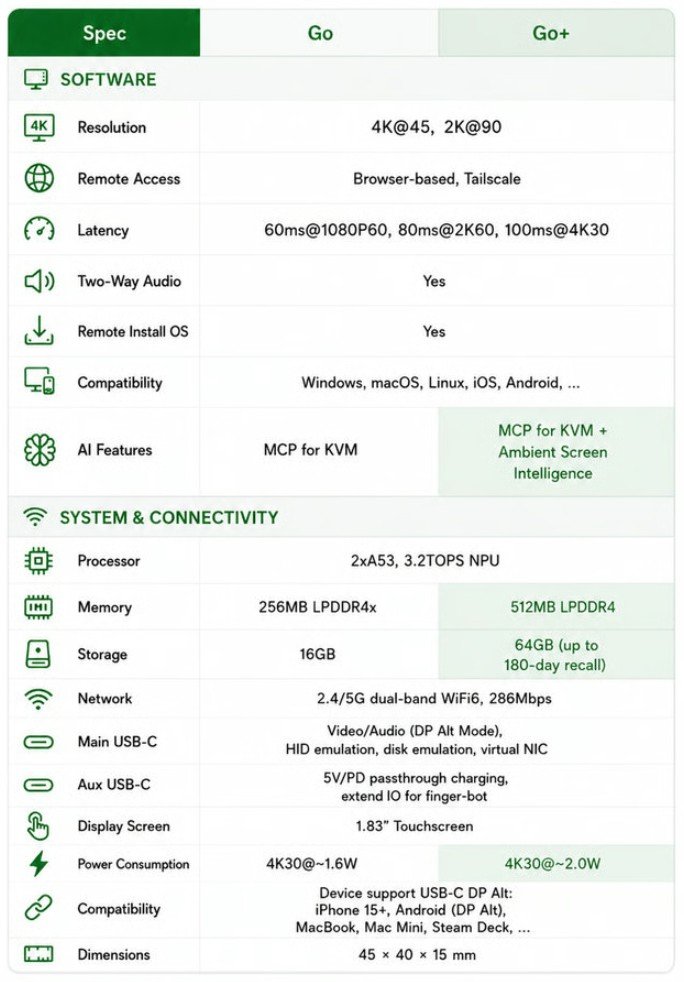
NanoKVM-Go specs
In addition to the main USB-C connection, NanoKVM-Go includes a second USB-C port for additional functions. The campaign describes this port as supporting PD passthrough for keeping connected phones or tablets charged, as well as expansion options such as a “finger robot” accessory for physically pressing a power button on systems that require a hard reboot.
The device also supports virtual storage, allowing users to mount a virtual USB drive and perform remote OS installation through the browser interface. Other listed features include power control, keyboard input, mouse control, and screenshot capture.
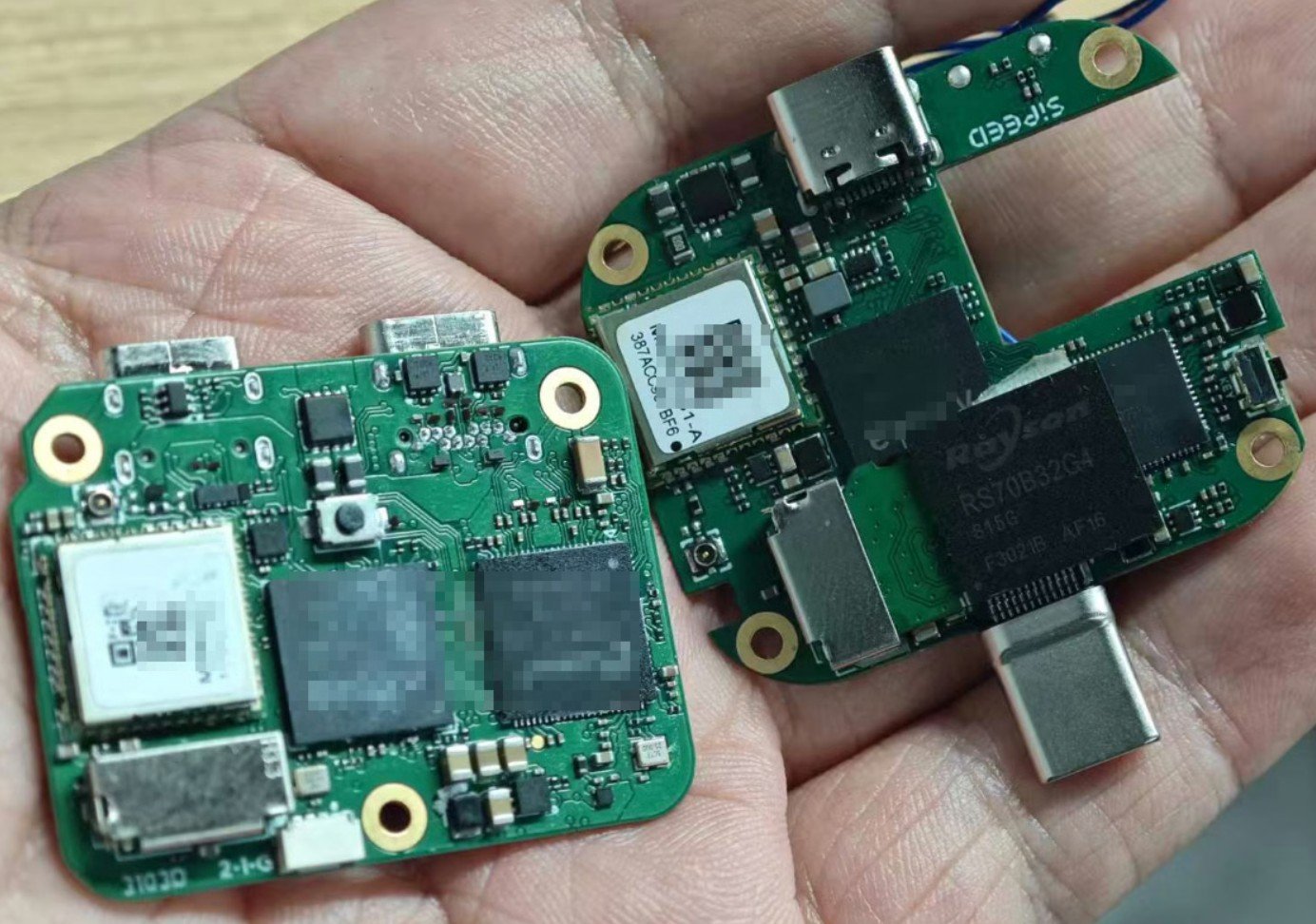
NanoKVM-Go PCB design
A major focus of the campaign is AI agent integration. Sipeed describes NanoKVM-Go as an “AI-native” KVM, with KVM functions exposed through an MCP server when enabled by the user. This is intended to allow AI agents to view the screen and interact with the remote system using hardware-level keyboard and mouse input.
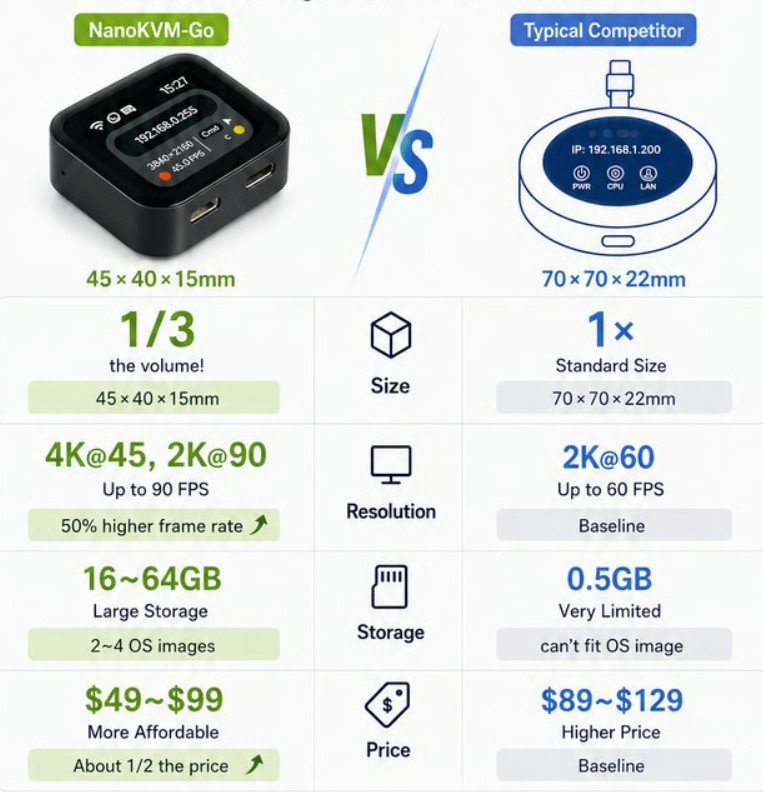
NanoKVM-Go comparison
The higher-end NanoKVM-Go+ version adds what the campaign calls “Ambient Screen Intelligence,” including screen history, offline OCR, screen timelapse, and an MCP endpoint for AI agents to query screen context.
The campaign states that NanoKVM-Go+ includes a 3.2 TOPS AI processor for offline recall features without requiring cloud access, a subscription, or an internet connection.
NanoKVM-Go+ demo
Sipeed also highlights compatibility with its PicoClaw AI agent software, along with other agent frameworks shown in the campaign materials, including OpenClaw, Claude Code, Codex, and Hermes Agent. The company says NanoKVM-Go exposes its AI API openly, allowing users to work with different AI providers or self-hosted configurations.
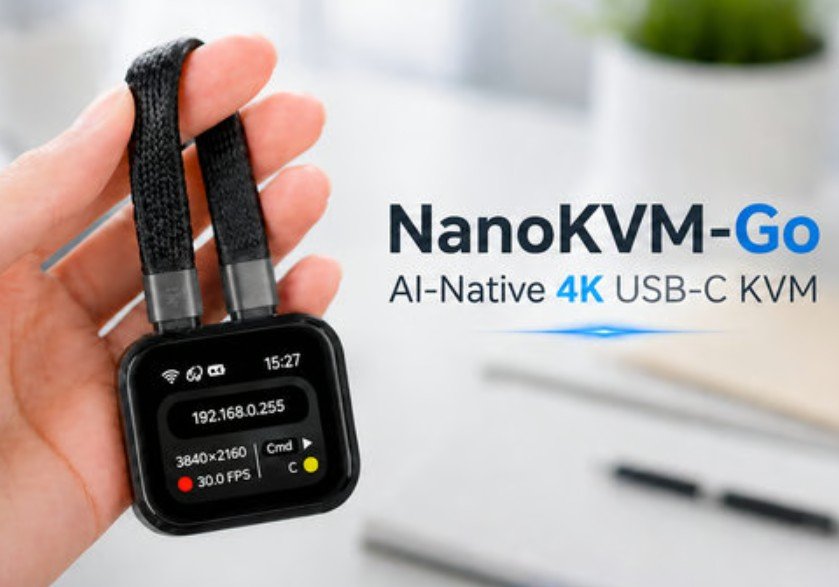
NanoKVM-Go
Further Information
NanoKVM-Go is offered through Kickstarter reward tiers starting at HK$384 ($49) for the Super Early Bird NanoKVM-Go, with other single-unit NanoKVM-Go tiers listed at HK$462 ($59) and HK$540 ($69).
NanoKVM-Go+ tiers start at HK$619 ($79), with additional tiers at HK$697 ($89) and HK$775 ($99). Multi-unit three-pack and five-pack rewards are also available, with estimated delivery listed as August 2026.

Please comment here...