


xSDR packs 2×2 MIMO, Artix-7 FPGA, and 3.8 GHz tuning into M.2 2230 form factor
Feb 14, 2026 — by Giorgio Mendoza 334 views Crowd Supply has featured the xSDR, a compact M.2 2230 A+E-key software-defined radio module that combines a Lime Microsystems LMS7002M RF transceiver with an AMD Artix-7 FPGA. Designed for direct integration into laptops, tablets, embedded PCs, and edge systems, it delivers 2×2 MIMO RX/TX operation across a 30 MHz to 3.8 GHz tuning range.
The LMS7002M supports dual-channel transmit and receive paths with channel bandwidths from 0.5 MHz to 90 MHz. Sample rates range from 0.1 MSPS up to 122.88 MSPS in SISO mode, and above 80 MSPS in MIMO configurations.
— ADVERTISEMENT —
Four MHF4 RF connectors expose the RF chains, while a 26 MHz TCXO with 0.5 ppm stability provides clock accuracy. Multiple boards can be externally synchronized for phase-coherent multi-channel arrays.
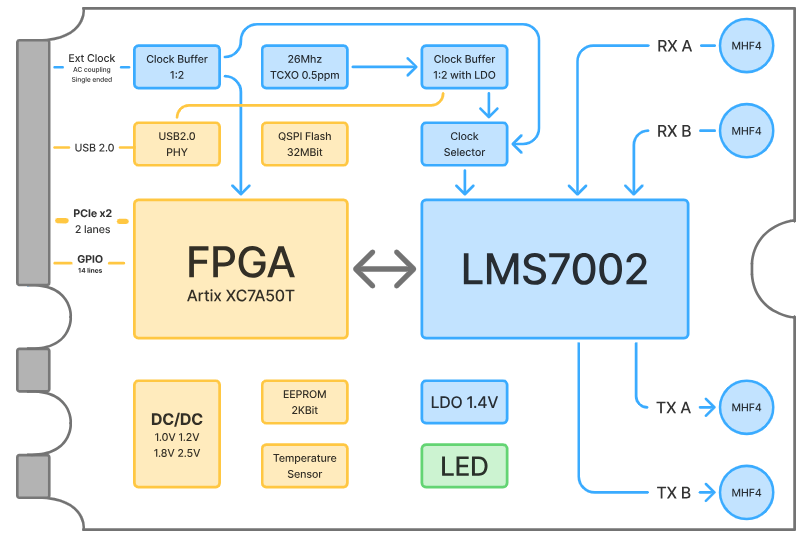
xSDR block diagram
An Artix-7 XC7A50T FPGA handles baseband processing and high-speed data movement between the RF front end and host interface. Onboard components include a USB 2.0 PHY, QSPI flash, EEPROM, temperature sensor, clock buffers, and DC/DC regulators.
The host interface supports both USB 2.0 and PCIe 2.0 ×2 over the M.2 connector, enabling deployment in embedded systems without external enclosures.
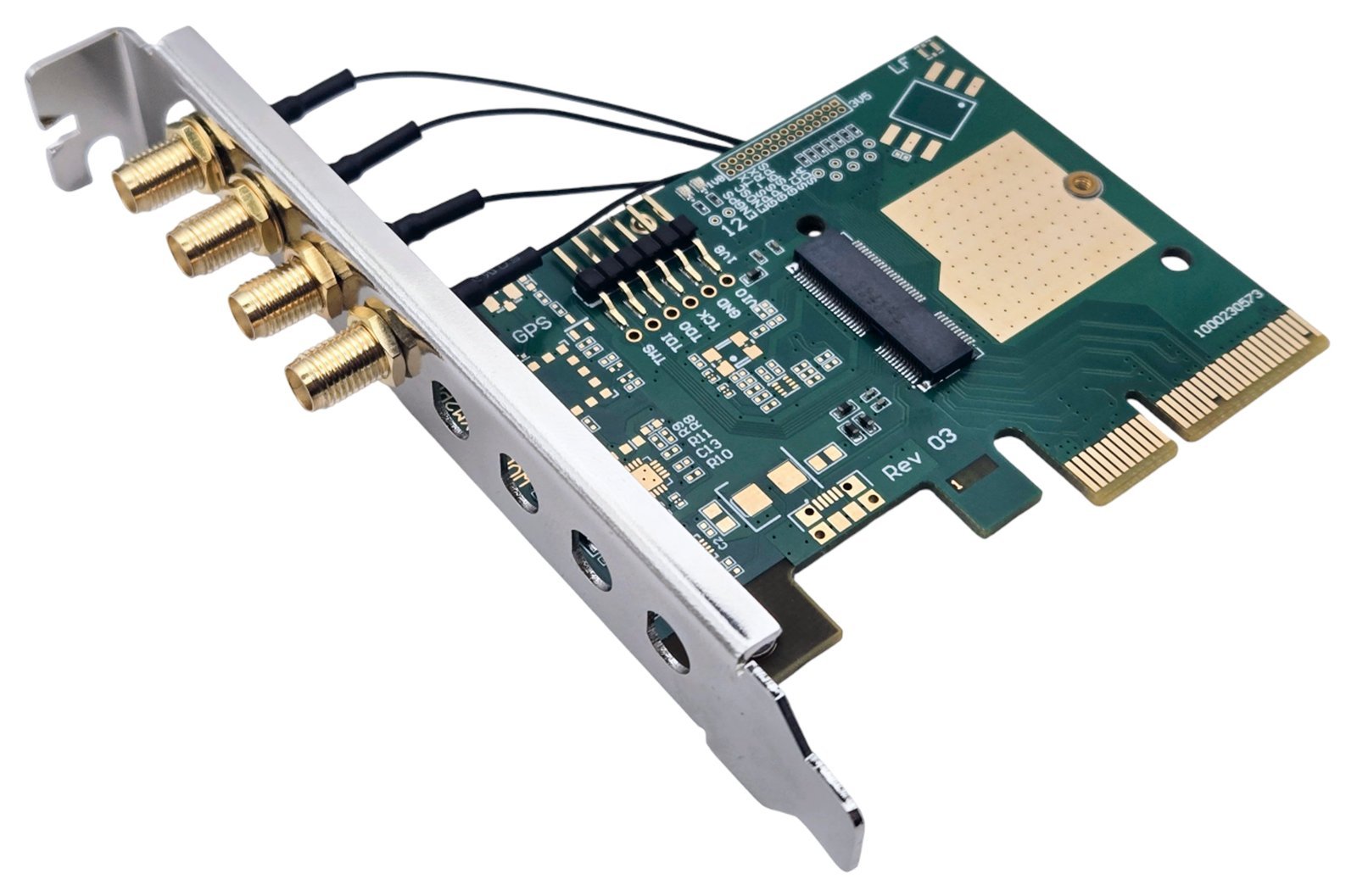
M.2-to-PCIe breakout board
Compared to USB dongle-style SDRs, the M.2 format enables direct internal installation, reducing cable clutter and improving integration for compact platforms.
Adapter boards allow use over USB or PCIe slots, and existing uSDR adapters are compatible, exposing one RX and one TX path when used with legacy breakout boards.
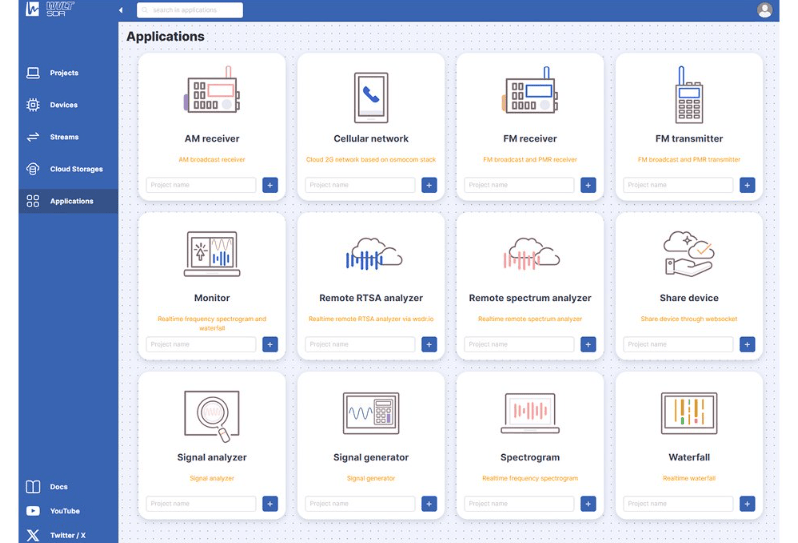
wsdr.io web application
Software support includes compatibility with GNU Radio, SoapySDR, srsRAN, and other established SDR tools. The platform also integrates with wsdr.io, a web-based SDR environment that enables browser-based configuration, monitoring, and RF application development.
Use cases highlighted include cellular network experimentation (via srsRAN or OsmoBTS), embedded RF processing, spectrum analysis, data links, and signal intelligence applications.
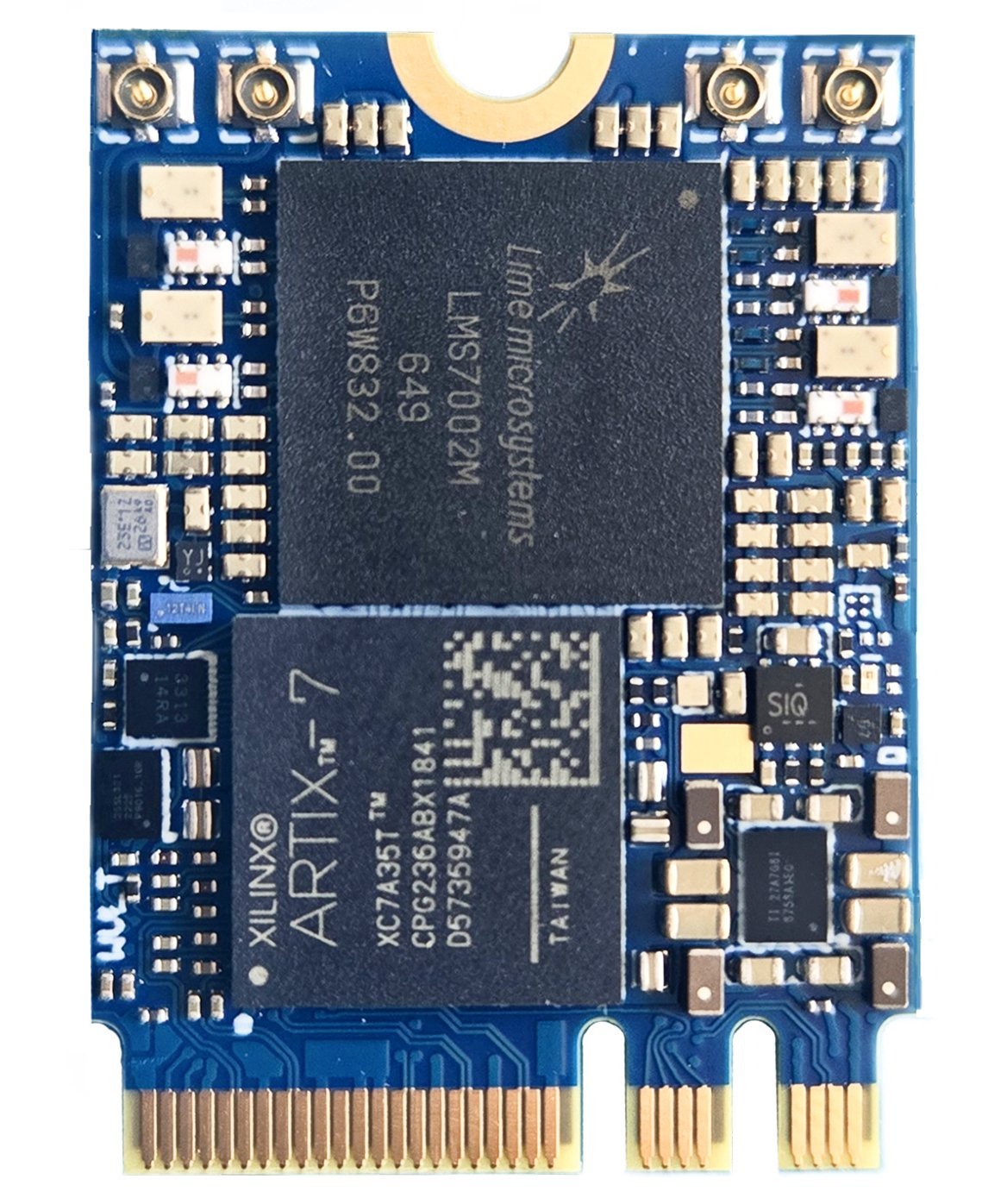
xSDR module
Further Information
Reward tiers begin at $549 for the xSDR module, with a $89 PCIe breakout board and optional USB, Mini PCIe, and M.2 adapters available separately.
Antenna add-ons cover sub-GHz through multi-band 4G and 5G models, while the top-tier xMASS SDR bundles four xSDR units into an 8×8 MIMO PCIe platform priced at $4,900.

Please comment here...