


SpacemiT K3 integrates 8-core RISC-V CPU cluster and 60 TOPS AI engine
May 10, 2026 — by Giorgio Mendoza 822 views
SpacemiT’s Key Stone K3 is a high-performance RISC-V SoC designed for AI and edge computing applications. The processor combines eight X100 64-bit RISC-V CPU cores with eight A100 AI-oriented compute cores, along with multimedia, networking, and high-speed I/O support targeting edge and embedded AI workloads.
The CPU subsystem integrates eight X100 RISC-V cores operating at up to 2.4 GHz, with a shared 8MB L2 cache and compliance with the RVA23 and RVV 1.0 standards. SpacemiT claims the SoC delivers up to 130 KDMIPS of compute performance.
— ADVERTISEMENT —
The AI subsystem consists of eight A100 AI cores rated for up to 60 TOPS using FP4 sparse workloads, along with vector extensions and AI-oriented instruction sets. The datasheet also claims the platform can run language models with up to 30 billion parameters at more than 10 tokens per second.
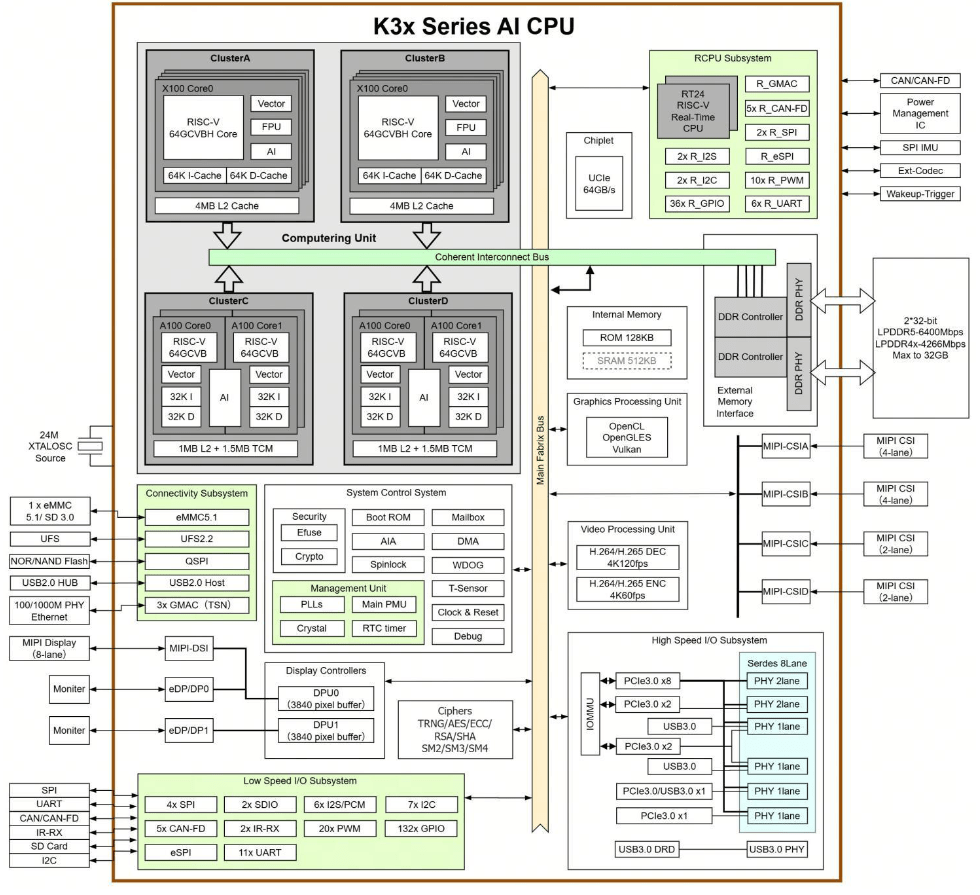
K3x series block diagram
Memory support includes dual-channel LPDDR5 at up to 6400 MT/s or LPDDR4x at up to 4266 MT/s, supporting capacities up to 64GB and bandwidth up to 51 GB/s. Storage interfaces include SPI flash, eMMC 5.1, SD 3.0, UFS 2.2, and NVMe storage over PCIe.
The multimedia subsystem integrates a GPU supporting Vulkan 1.3, OpenCL 3.0, OpenGL ES 3.2, and EGL 1.5 APIs. The SoC also includes hardware video acceleration with support for H.264, H.265, VP8, VP9, MPEG2, MPEG4, VC-1, and H.263 codecs. The datasheet lists decoding at up to 4K120 and encoding at up to 4K60.
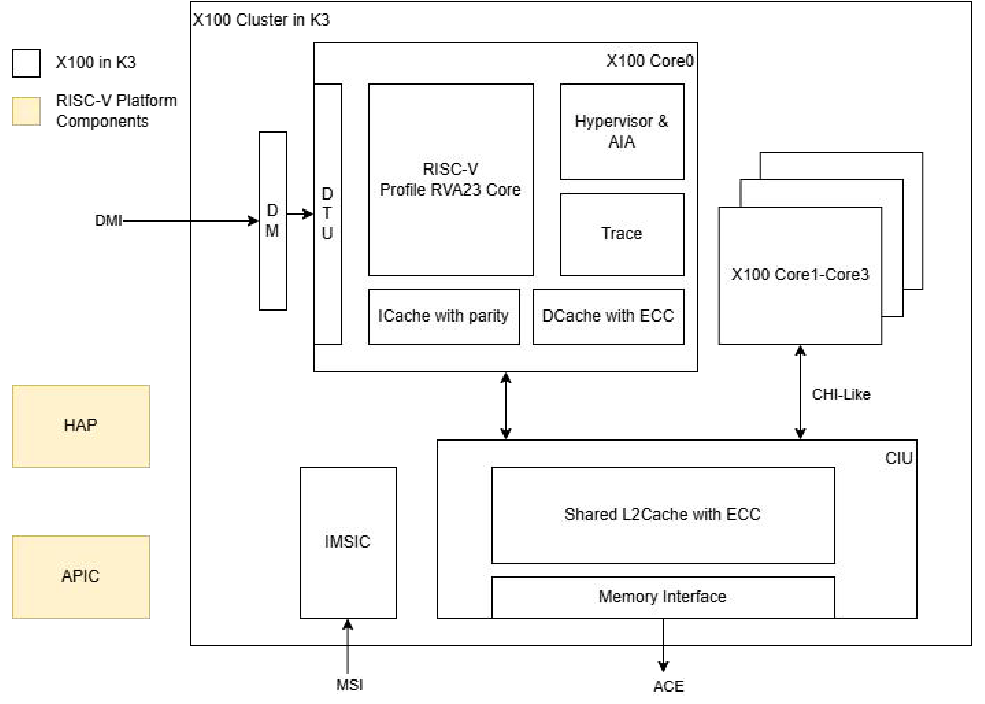
SpacemiT X100 cluster block diagram
Display support includes MIPI DSI and DP/eDP interfaces capable of driving dual 3840×2160 displays at 60 fps. The image subsystem provides four MIPI CSI interfaces with up to 12 total camera lanes, supporting multiple RAW and YUV formats.
Connectivity features include eight PCIe Gen3 lanes with Root Complex and Endpoint modes, four Gigabit Ethernet MACs with TSN capability, multiple USB 3.0 interfaces, CAN-FD, SPI, UART, PWM, and I2C interfaces.
The SoC also integrates virtualization and security extensions including RVH 1.0, IOMMU support, secure boot, cryptographic acceleration, and protection mechanisms against speculative execution attacks.
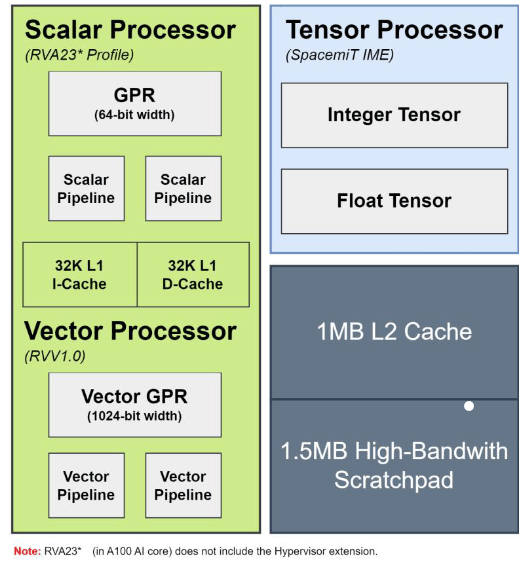
SpacemiT A100 AI core block diagram
The K3 also integrates a dual-core RT24 RISC-V subsystem for system management and low-power operation. According to the datasheet, the SoC is designed for operation across an industrial temperature range of -40°C to +85°C with a TDP ranging from 15W to 25W.
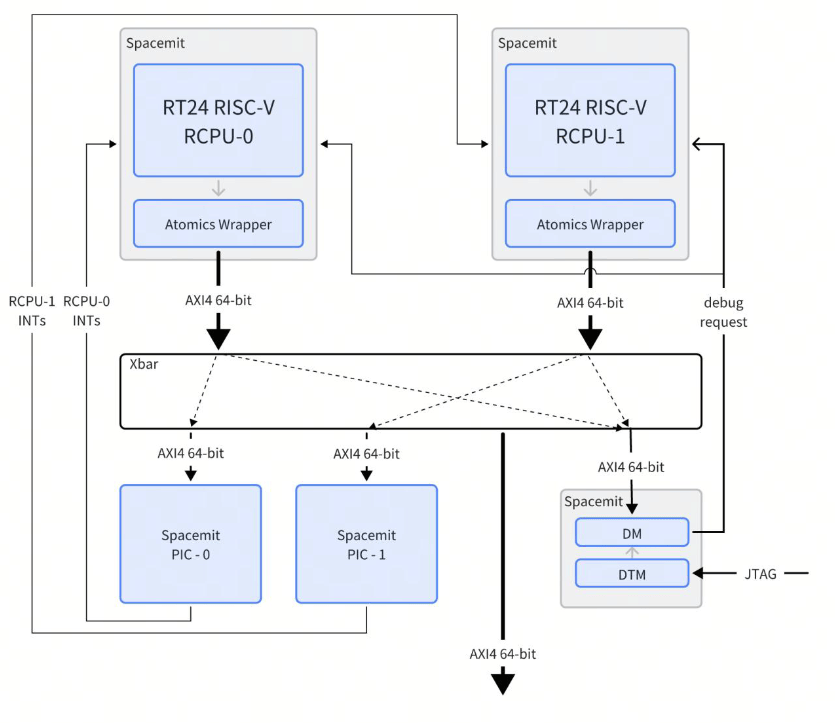
RT24 RISC-V core block diagram
Software support for the platform also appears to be progressing upstream. According to Banana Pi Open Source Hardware on social media, key K3 SoC enablement patches have already been merged for Linux 7.0 mainline, with device tree sources available under arch/riscv/boot/dts/spacemit/ in the upstream Linux kernel repository.
The tree currently includes k3.dtsi, k3-pinctrl.dtsi, and k3-pico-itx.dts files associated with the platform.
Further Information
Although the K3 platform is still relatively new, several companies appear to be preparing products based on the SoC. Recent upstream kernel activity and public references suggest that additional development boards and embedded systems based on the SpacemiT K3 may emerge soon.

Woud be much more interested in a model with 16 normal X100 cores or a cheaper 8 x X100 core one. Hope they make on of those.