


Solid Sands webinar to cover C++ multithreading qualification with SuperGuard
Jul 6, 2026 — by Giorgio Mendoza 90 views
Solid Sands, an Amsterdam-based provider of compiler and library testing technology, will host a July 8 webinar titled “SuperGuard: Comprehensive Testing for C++ Multi-Threading Primitives,” focused on C++ multithreading qualification for safety-critical software.
Multithreading is increasingly important in applications such as autonomous vehicles, robotics, industrial systems, and embedded AI platforms, where software must coordinate work across multicore processors and heterogeneous computing resources. However, Solid Sands notes that multithreaded software remains difficult to verify because non-deterministic execution can make faults hard to reproduce, detect, and isolate.
— ADVERTISEMENT —
The webinar will address C++ standard library headers such as <atomic>, <thread>, and <mutex>, which provide support for parallel execution, synchronization, and resource coordination. While these facilities are central to modern C++ development, they can also create a validation gap for developers working in safety-critical environments.
During the session, Solid Sands will introduce its SuperGuard Library Safety Qualification Suite and discuss its expanded testing capabilities for multithreading headers. The webinar will examine how correct implementation of these C++ library components can be verified across different platforms, while also covering the challenges created by hardware interaction, portability, and non-deterministic behavior.

SolidSands logo
Topics listed for the session include the complexity of parallelism, the difficulty of detecting multithreaded faults, the portability problem in designing robust tests across platforms, the relationship between multithreading and MISRA C++:2023, and how SuperGuard can be integrated into an existing development workflow.
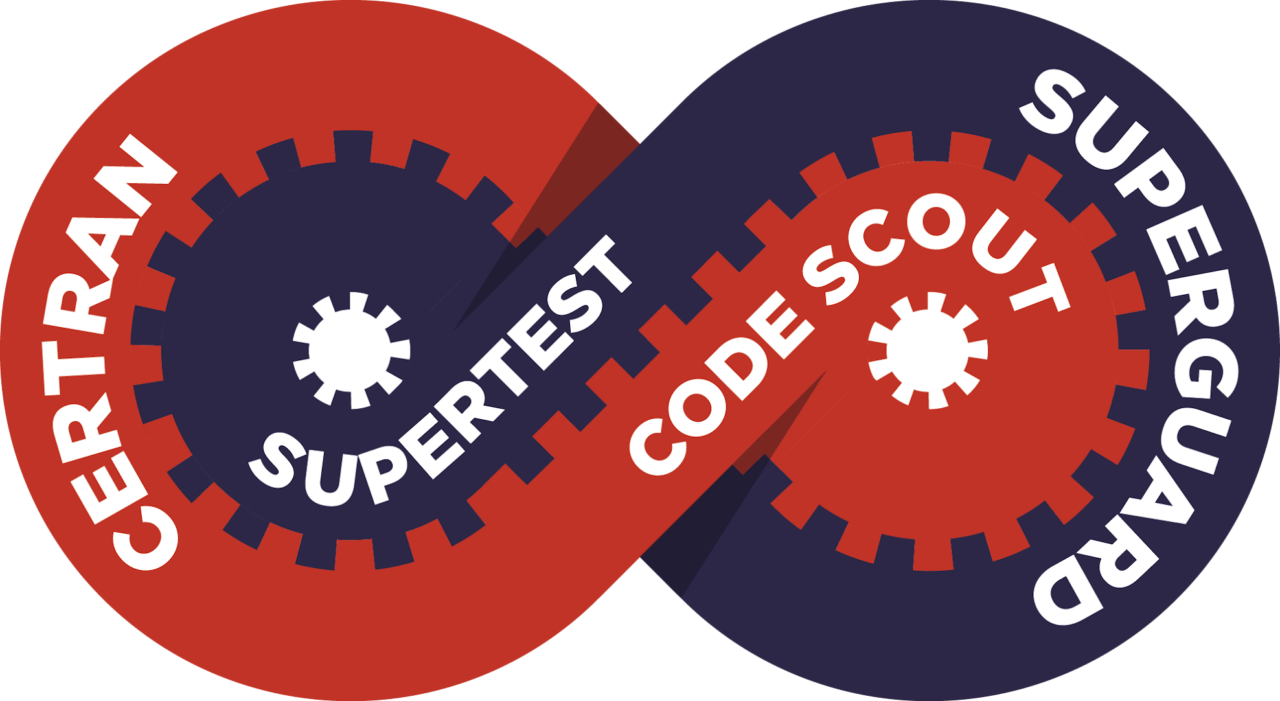
The topic connects with Solid Sands’ broader focus on Continuous Qualification, a methodology that treats compiler and library qualification as an ongoing engineering process rather than a one-time project milestone. According to Solid Sands, qualification evidence applies only within a defined “safety envelope,” which can include specific compiler versions, library versions, option combinations, target environments, and library subsets used by an application.
As software projects evolve, updates to toolchains, build systems, third-party components, and application requirements can move a project outside that qualified envelope. Continuous Qualification is intended to detect when this happens and either support automated requalification or signal that an explicit engineering decision is required.
Continuous Qualification
Solid Sands has also highlighted its collaboration with BUGSENG on a Continuous Qualification system for C and C++ toolchains. The combined approach brings together Solid Sands’ SuperTest for compiler validation and SuperGuard for library qualification with BUGSENG’s ECLAIR tools for build analysis, library-use detection, static analysis, and monitoring of the qualified safety envelope.
For library qualification, the approach focuses on identifying the subset of the C++ standard library actually used by an application and then applying requirements-based tests to that subset. This is particularly relevant for C++ standard libraries, where only part of the library may be used in a safety-critical project, and where implicit language features can make it difficult for developers to manually track the exact scope of library use.
Further Information
The webinar will take place on Wednesday, July 8, 2026, at 11:00 AM EDT, 8:00 AM PDT, 4:00 PM BST, and 5:00 PM CEST. It will feature Curtis Franklin, Editor in Chief of Circuit Cellar, and Marcel Beemster, CTO at Solid Sands, followed by a live Q&A.

Please comment here...