


RISC-V-based ESP32-P4 handheld integrates AMOLED display and LoRa
Dec 13, 2025 — by Giorgio Mendoza 17,579 views LILYGO has introduced the T-Display P4, a handheld development board built around Espressif’s ESP32-P4 application processor and a companion ESP32-C6 for wireless connectivity. The platform targets portable HMIs, sensor-equipped field devices, and edge systems that require a display, camera support, and multiple radios in a compact enclosure.
Measuring about 63 × 109 × 22 mm, the T-Display P4 is built around the ESP32-P4, which combines a dual-core RISC-V CPU running at up to 360–400 MHz with an additional low-power RISC-V core operating at 40 MHz.
— ADVERTISEMENT —
The SoC integrates media-oriented hardware for image and voice processing, including a JPEG codec, ISP, a hardware H.264 encoder, and MIPI CSI and DSI interfaces.
The product page mentions that the platform includes 16 MB of flash and 32 MB of PSRAM, providing sufficient memory for graphical user interfaces, buffering, and real-time data processing.
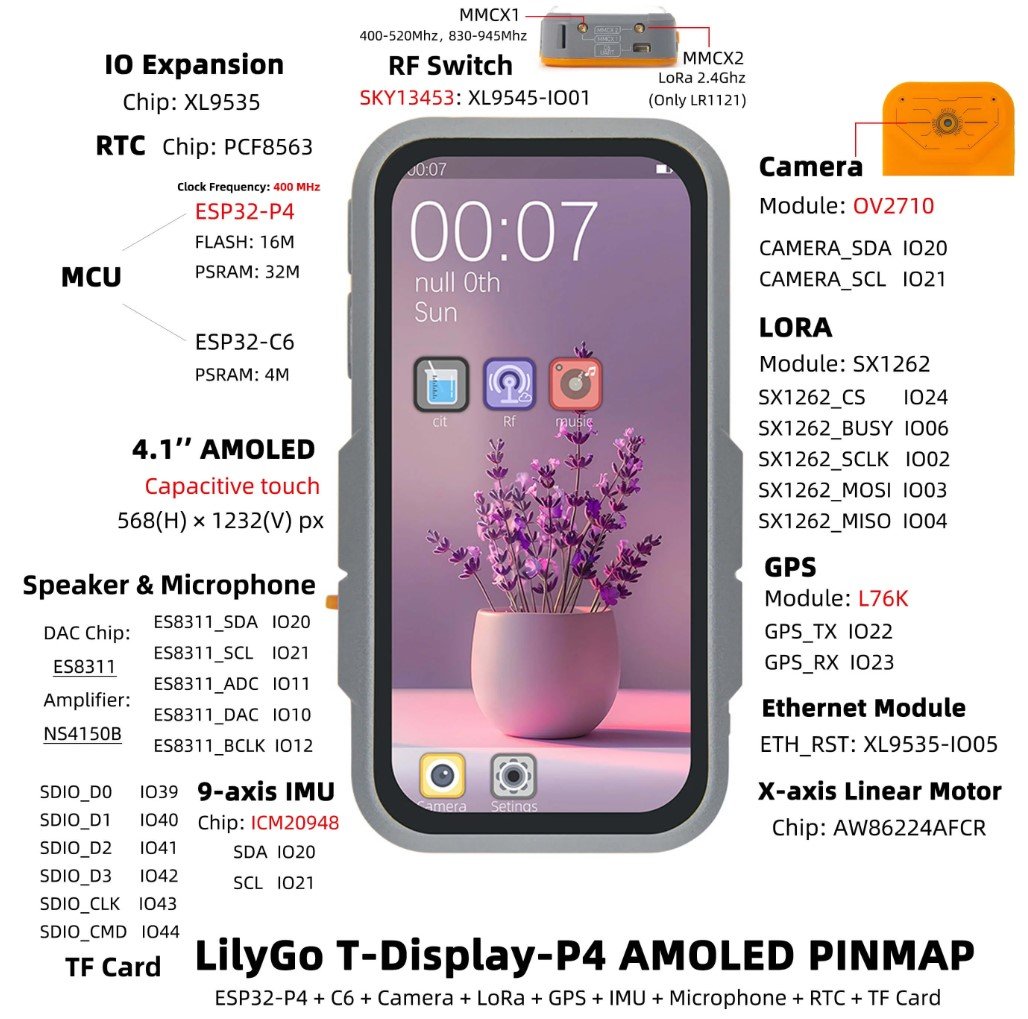
T-Display P4 AMOLED
Wireless networking is handled by a secondary ESP32-C6, which provides 2.4 GHz Wi-Fi 6 (802.11ax) and Bluetooth 5 LE, allowing the ESP32-P4 to focus on application logic, graphics, and media processing.
Two display variants are offered. The H753 version uses a 4.1-inch AMOLED capacitive touchscreen with a resolution of 568 × 1232 pixels and pairs it with a rear-mounted 2 MP OV2710 MIPI camera.
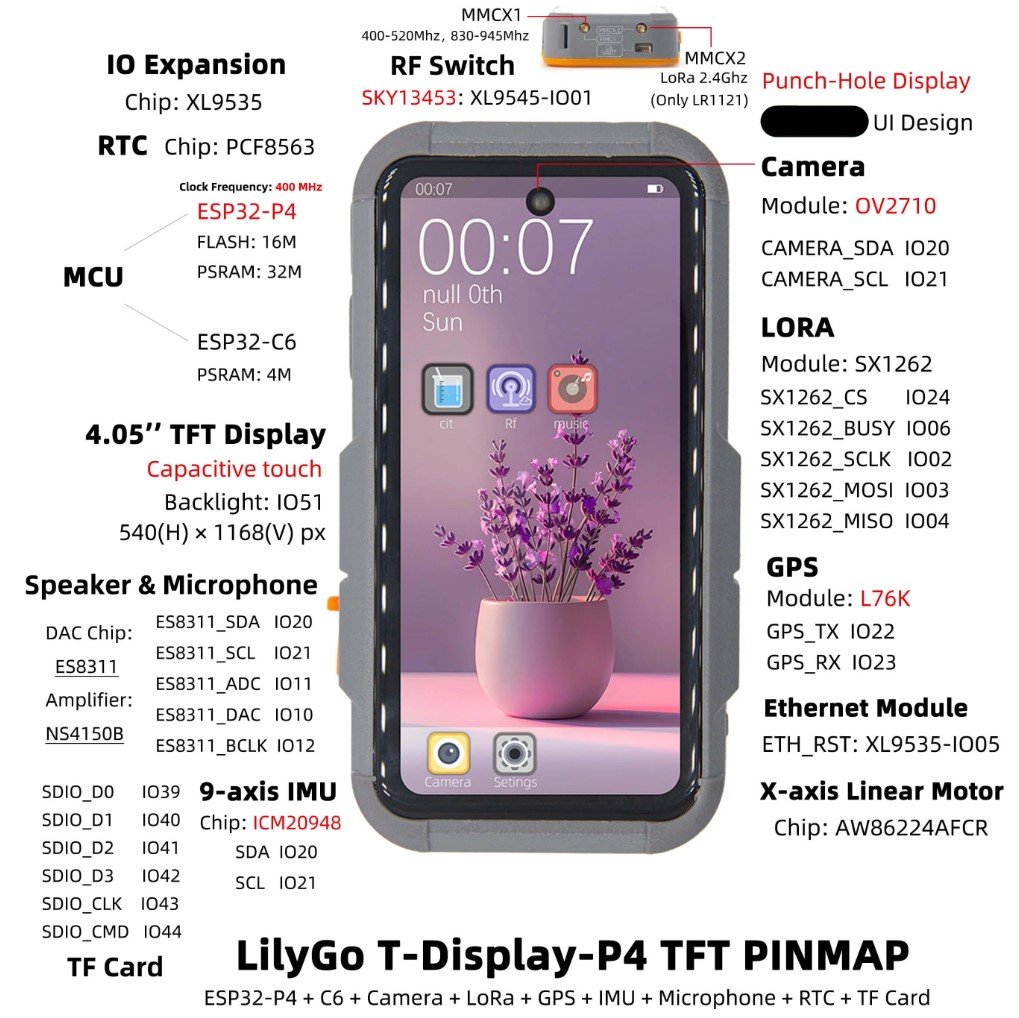
T-Display P4 TFT
The H753-01 version features a 4.05-inch TFT display at 540 × 1168 pixels and a punch-hole layout that places the camera on the front of the device. Based on the product images, the two variants appear to expose a similar set of onboard peripherals.
Beyond Wi-Fi and Bluetooth, the T-Display P4 integrates a Semtech SX1262 sub-GHz LoRa transceiver with support for LoRa modulation, transmit power up to +22 dBm, and selectable regional bands including 868 MHz, 915 MHz, or 920 MHz.
The platform also includes an L76K GNSS receiver for positioning and a wired Ethernet interface for stable local networking. Motion sensing is provided by an ICM20948 9-axis IMU, while audio input and output are handled through an ES8311 codec and an NS4150B amplifier driving the onboard speaker.
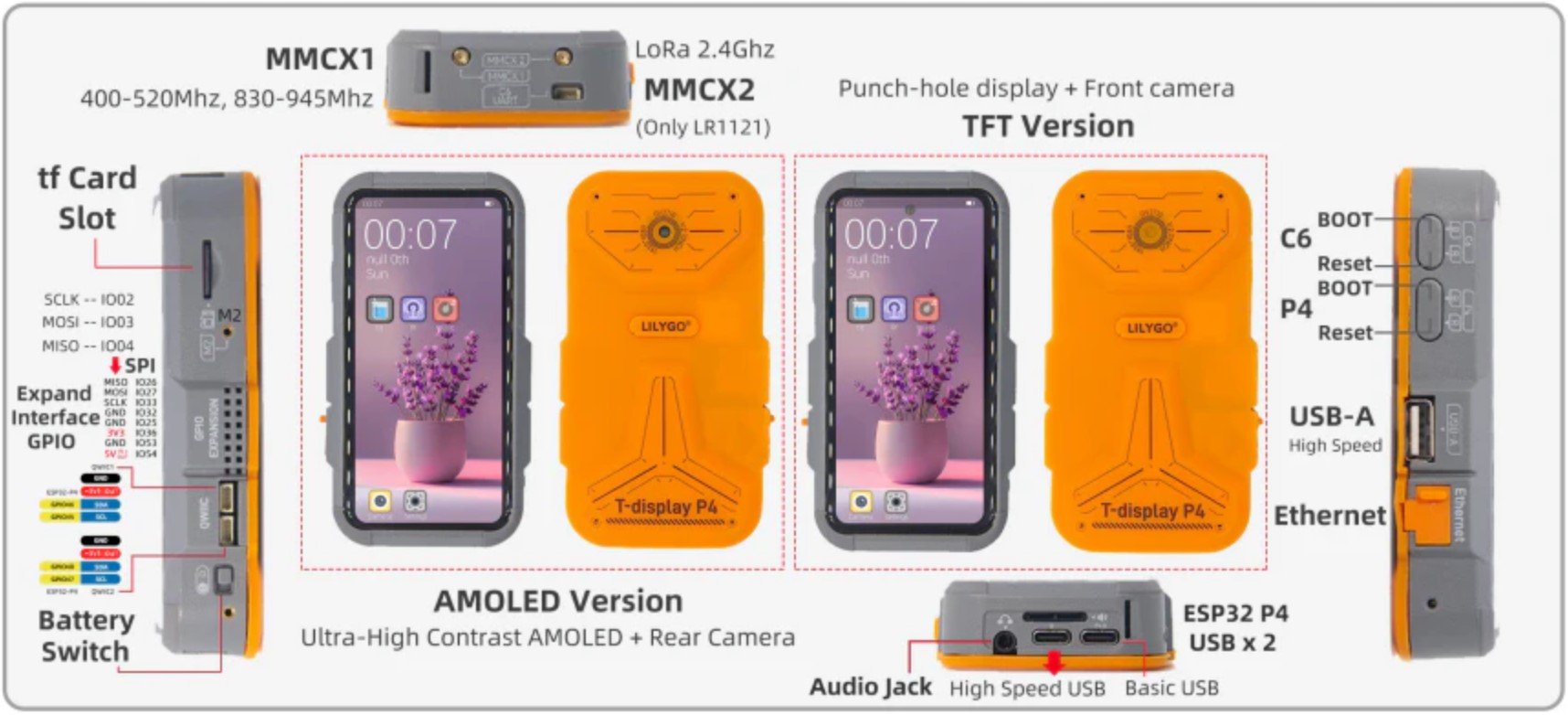
T-Display P4 Multiple Views
The board is designed as a self-contained portable system, integrating a microSD card slot for storage expansion, a linear vibration motor for haptic feedback, RTC support, and battery management with USB charging.
I/O expansion is handled through an XL9535 GPIO expander, and multiple USB ports are available, including high-speed USB-A and USB-C for data, OTG, and debugging.
As with most LILYGO products, software support is centered on Espressif’s ESP-IDF, with example projects and board files available through the company’s GitHub repositories.
Further Information
The LILYGO T-Display P4 is currently shipping worldwide. The 4.1-inch AMOLED version is priced at $119.30, while the 4.05-inch TFT punch-hole version is listed at a regular price of $97.40. Both versions support the same LoRa frequency options.

Just build a phone already and smh 😂
It is tempting to buy a used Motorola and hope to encounter all features in the LineageOS, and certainly to connect old better screens and their multipoint digitizers, and to be glad of USB 3.4 instead of high speed, but as the field computer with CPU and RAM (ack!) under $100, (2 RISC V cores, hyper low power etc ) you can concentrate on making the network and location bits earn out without interference from Shiny King or other fat apps. In your application. That they didn’t dream for you. 2 weeks on a charge, etc. etc.