


Radxa Cubie A7S Integrates A733 SoC, RISC-V MCU, and LPDDR5 Memory
Feb 12, 2026 — by Giorgio Mendoza 819 views Radxa has introduced the Cubie A7S, a 51 x 51 mm single board computer built around the Allwinner A733. The compact board combines Cortex-A76 and Cortex-A55 CPU cores with LPDDR5 memory, PCIe 3.0 expansion, and an integrated NPU rated at 3 TOPS, targeting edge AI, vision, and embedded multimedia applications.
The Allwinner A733 features a heterogeneous octa-core configuration with 2x Cortex-A76 cores running up to 2.0GHz and 6x Cortex-A55 cores up to 1.8GHz. Graphics are handled by an Imagination PowerVR BXM-4-64 MC1 GPU supporting OpenGL ES 1.1/2.0/3.x, Vulkan 1.3, and OpenCL 3.0 for UI rendering and compute acceleration.
— ADVERTISEMENT —
An integrated NPU provides up to 3 TOPS at INT8 precision and supports INT4, INT8, INT16, FP16, and BF16 computation. According to the specifications, the platform supports common AI frameworks including TensorFlow, PyTorch, ONNX, Caffe, TFLite, and Darknet. Radxa also highlights Linux and Android deployment with cross-platform model support.
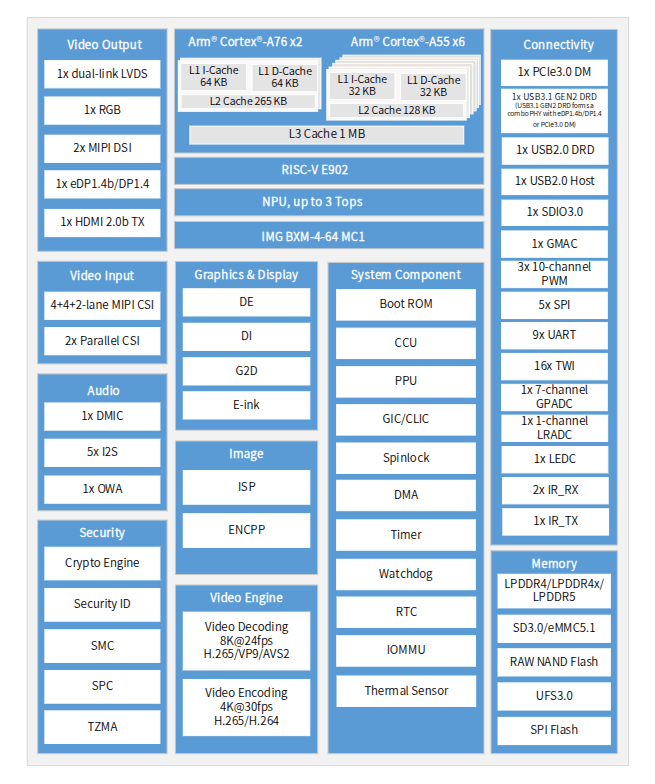
Allwinner A733 block diagram
In addition to the Arm CPU cluster, the SoC integrates a RISC-V XuanTie E902 microcontroller running up to 200MHz. The MCU is designed for low-power and real-time tasks such as motor control, sensor data acquisition, and system management while the main cores are in low-power states.
Memory options include LPDDR5 configurations up to 16GB. Storage can be provisioned through optional onboard eMMC up to 256GB or via a microSD slot. For higher-performance storage, the board exposes a PCIe 3.0 x1 interface through an FPC connector supporting NVMe SSD expansion.

Cubie A7S block diagram
Multimedia support includes H.264/H.265 encoding up to 4K@30fps and hardware decoding of H.265/VP9/AVS2 content up to 8K@24fps. Display output is handled via a USB-C port with DisplayPort Alt Mode supporting up to 4Kp60, while a 4-lane MIPI CSI interface enables direct camera connectivity.
Networking consists of Gigabit Ethernet along with onboard Wi-Fi 6 and Bluetooth 5.4 with an external antenna connector. Additional I/O includes a second USB-C port for USB 2.0 and 5V power input, plus a USB 2.0 Type-A host port.
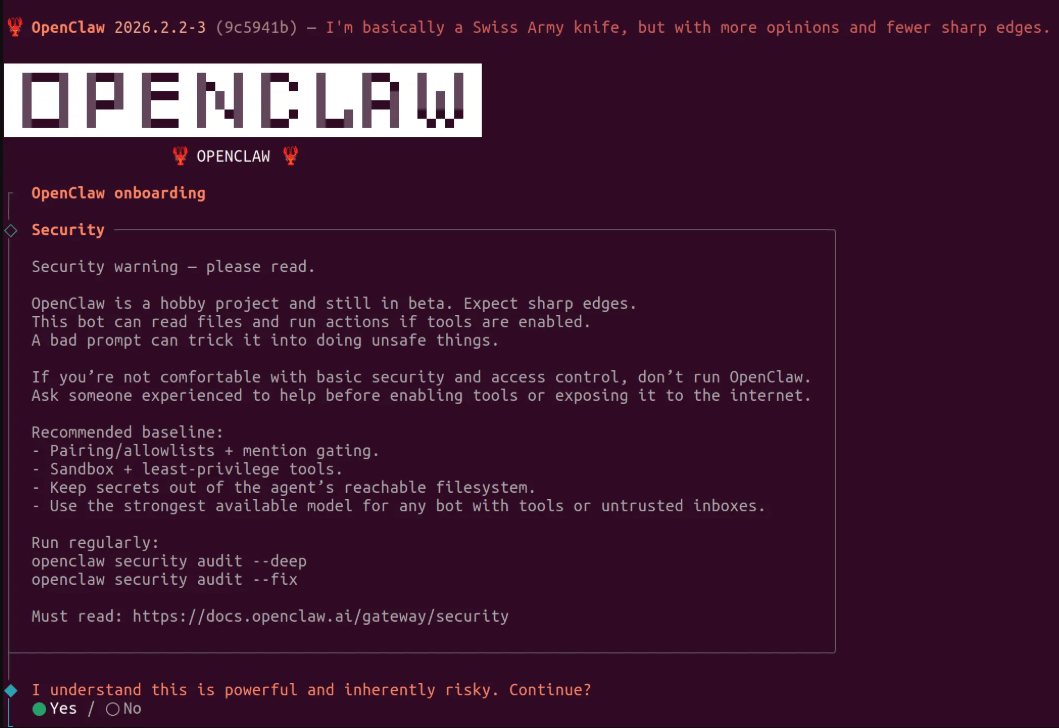
OpenClaw demo
Additional interfaces include 15-pin and 30-pin GPIO headers supporting UART, I2C, I2S, PWM, and general-purpose I/O, along with a fan connector and a USB boot button.
Radxa provides structured documentation for the Cubie A7S through its online wiki, covering initial setup, system installation to microSD or eMMC, and day-to-day usage. The documentation includes guidance for headless operation, Wi-Fi and wired networking, SSH and serial console access, VNC remote desktop, Bluetooth, audio configuration, and system updates.
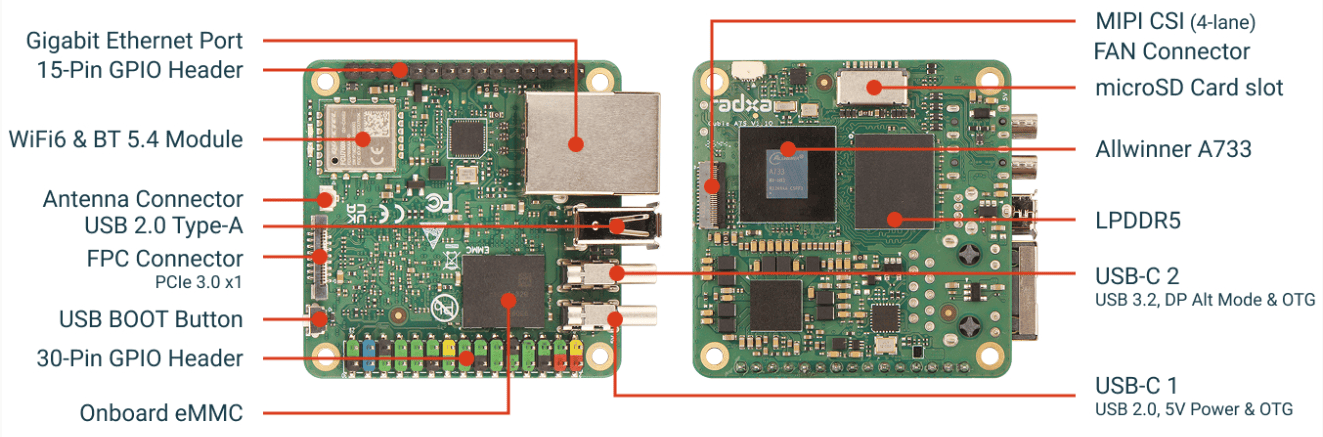
Cubie A7S peripherals
For developers, the wiki also outlines hardware usage details, application development topics, and low-level development resources including build system setup, U-Boot development, kernel development, and Radxa OS customization.
Specifications listed for the Cubie A7S include:
- Memory:
- Up to 16GB LPDDR5
- Storage:
- Optional onboard eMMC up to 256GB
- 1× microSD card slot
- PCIe 3.0 x1 via FPC connector (NVMe SSD support)
- Display:
- 1× USB-C w/ DisplayPort Alt Mode
- Camera:
- 1× 4-lane MIPI CSI
- Networking:
- 1× Gigabit Ethernet
- Onboard Wi-Fi 6
- Bluetooth 5.4
- 1× antenna connector
- USB:
- 1× USB-C (USB 3.2, DisplayPort Alt Mode & OTG)
- 1× USB-C (USB 2.0, 5V power input & OTG)
- 1× USB 2.0 Type-A (host)
- I/O Interfaces:
- 1× PCIe 3.0 x1 (FPC)
- 1× 15-pin GPIO header
- 1× 30-pin GPIO header
- Supports UART, I2C, I2S, PWM, GPIO
- Other Features:
- 1× fan connector
- 1× USB boot button
- Power:
- 5V input (via USB Type-C)
- Dimensions:
- 51 × 51 mm
Further Information
According to Radxa’s Twitter account, the Cubie A7S with 4 GB of RAM starts at about $25.00. However, the Arace Tech product page linked shows the board as out of stock as of the publication date.

Please comment here...