


PineVoice RISC-V smart speaker supports local wake-word detection for Home Assistant
Jul 26, 2026 — by Giorgio Mendoza 1,148 views
The PineVoice is a compact RISC-V smart speaker designed to operate as a local voice-assistant satellite for Home Assistant and other platforms supporting the Wyoming protocol. The device combines a dual-microphone array, built-in speaker, local wake-word detection, Wi-Fi and Bluetooth connectivity, and open-source firmware.
Previously known as the PineVox, the PineVoice is built around Bouffalo Lab’s BL606P system-on-chip. The processor combines 64-bit and 32-bit RISC-V cores and is supported by 32MiB of pSRAM, 788KiB of SRAM, and 16MiB of onboard flash storage.
— ADVERTISEMENT —
Wireless connectivity includes 2.4GHz 802.11b/g/n Wi-Fi and Bluetooth 5.2 with Bluetooth Classic and Bluetooth Low Energy support. Bluetooth LE is used during initial Wi-Fi provisioning, while regular voice-assistant communication takes place over the local network.
The audio subsystem includes a built-in speaker tuned for voice applications and a dual-microphone array. Controls on the top provide volume adjustment, manual voice activation, Wi-Fi provisioning, and hardware microphone muting. A center LED ring indicates states such as setup, standby, listening, processing, and response playback.
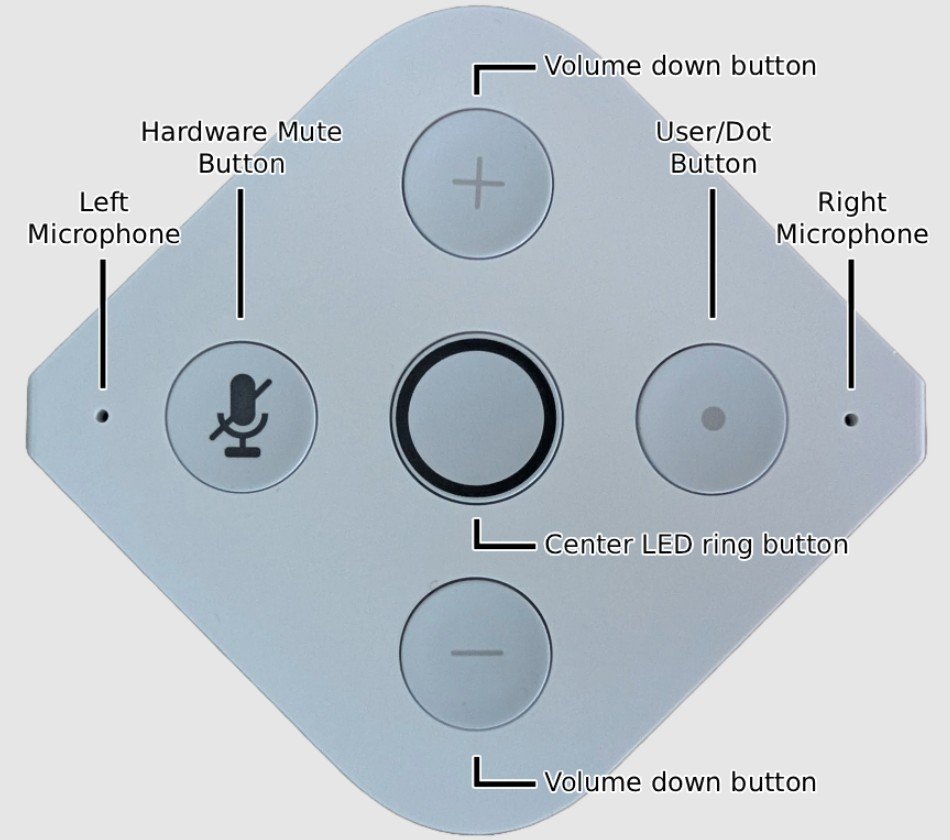
PineVoice top view
The open-source factory firmware allows PineVoice to operate as a Wyoming Satellite, with Wi-Fi provisioning through the Improv protocol, mDNS discovery, and local wake-word detection using MicroWakeWord. The default wake phrase is currently “Hey Jarvis,” and voice sessions can also be started by pressing the center button.
PineVoice functions as a voice endpoint rather than a complete standalone assistant. After detecting the wake word, the device sends the voice session over the local network to Home Assistant or another compatible platform, where speech recognition, automation, and response generation are handled.
PINE64 notes that Home Assistant can discover the speaker automatically through the Wyoming Protocol integration or connect to it manually using its network address.
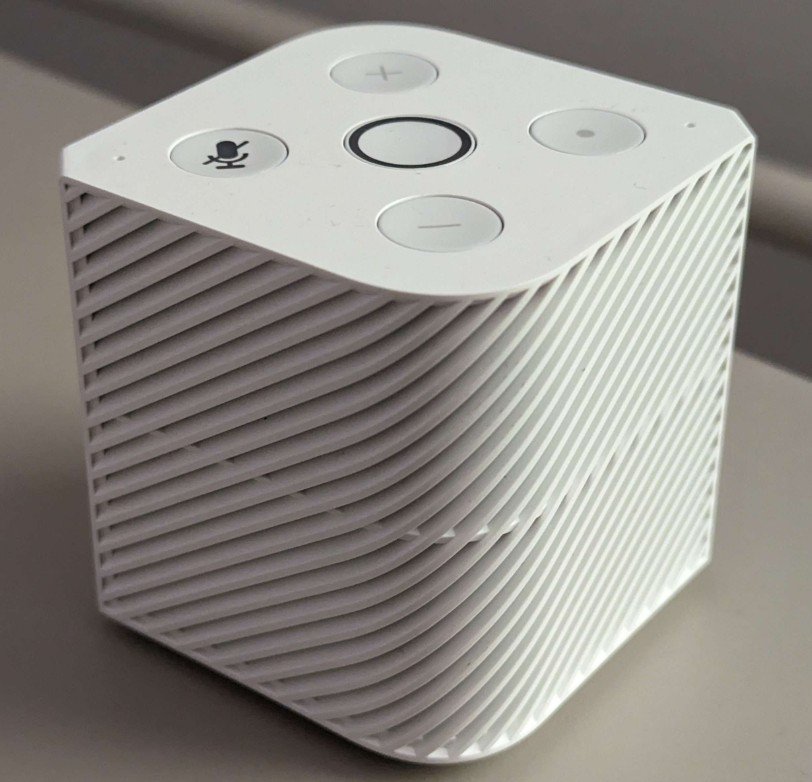
PineVoice design
PineVoice does not include a Zigbee radio, but it can be used alongside PINE64’s PineDio USB-C Zigbee Dongle in the same Home Assistant installation.
In this arrangement, PineVoice communicates with Home Assistant over Wi-Fi, while the PineDio dongle connects to the Home Assistant host over USB and provides access to Zigbee 3.0 sensors, switches, blinds, and other compatible devices.
For example, a spoken lighting command would be received through PineVoice and forwarded to Home Assistant. Home Assistant would then send the corresponding instruction through the Zigbee adapter.

PineDio USB-C Zigbee Dongle
In more recent news, PINE64 shared the complete 3D enclosure files for the PinePhone and PinePhone Pro. Unlike the previously available back-cover model, the new STEP assembly includes the buttons and internal and external frame components.
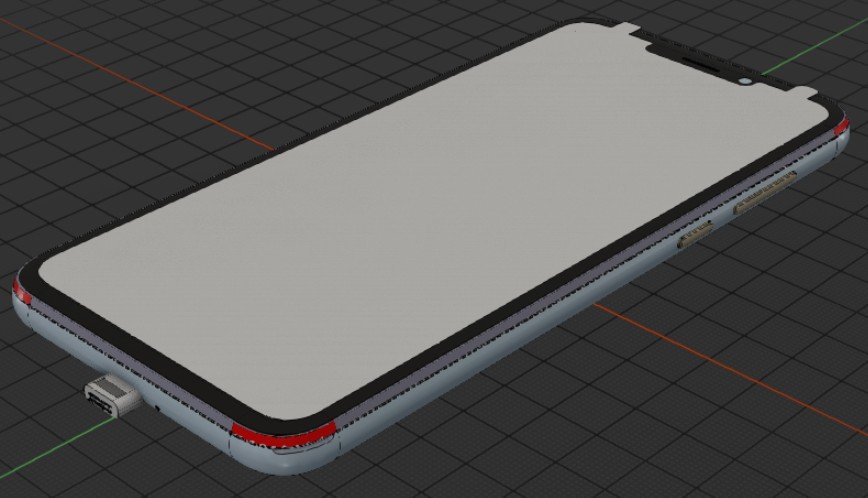
PinePhone 3D design
The release may help users create replacement parts, repair damaged enclosures, or develop custom modifications using 3D-printing and CAD tools. PINE64 also noted that a PinePhone successor is not currently planned, although the possibility has not been ruled out for the future.
Further Information

Please comment here...