


PiDP-1 Replica Recreates PDP-1 Computer Using Raspberry Pi
Mar 21, 2026 — by Giorgio Mendoza 892 views Obsolescence Guaranteed has introduced the PiDP-1, a hardware replica of the original 1960 PDP-1 computer, reimplemented using a Raspberry Pi for retro computing, gaming, and demoscene-style graphics programming. The kit recreates the front panel, switches, and interactive workflow of the original machine while running a software simulation on modern hardware.
The system is part of the PiDP series of historical replicas, which includes earlier PDP-8, PDP-10, and PDP-11 recreations. Unlike previous models, the PiDP-1 places more emphasis on interactive graphics, early video games, and hands-on programming.
— ADVERTISEMENT —
The PiDP-1 is offered in both rack-mounted and console-style versions, reflecting the variations seen in original PDP-1 systems. The replica includes interchangeable front panels and modular enclosures, allowing users to switch between configurations.
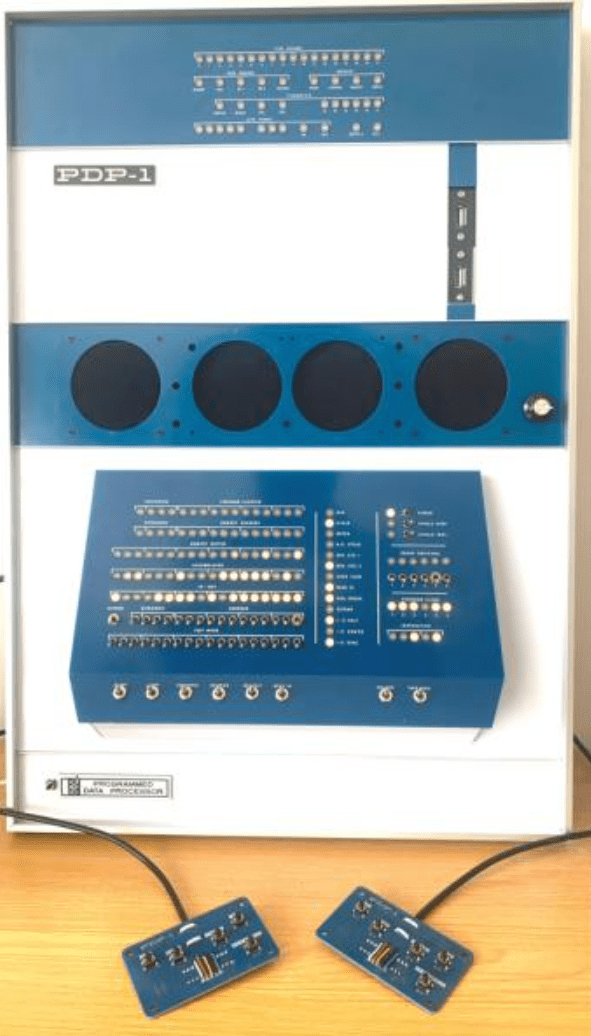
PiDP-1 Rack version
The PiDP-1 uses a Raspberry Pi to run a cycle-accurate simulation of the original PDP-1 hardware, including the Type 30 vector display. The front panel is fully functional, with switches and indicator LEDs (“blinkenlights”) mapped to the simulated CPU state, allowing direct interaction with programs at the hardware level.
Programs are entered and controlled using the front panel, mirroring the workflow of the original system. External controller boards are also provided for gameplay and interaction, particularly for titles such as Spacewar!.
The system relies on existing PDP-1 simulators implemented in software, including models written in Verilog and C, enabling accurate reproduction of instruction execution and display behavior.
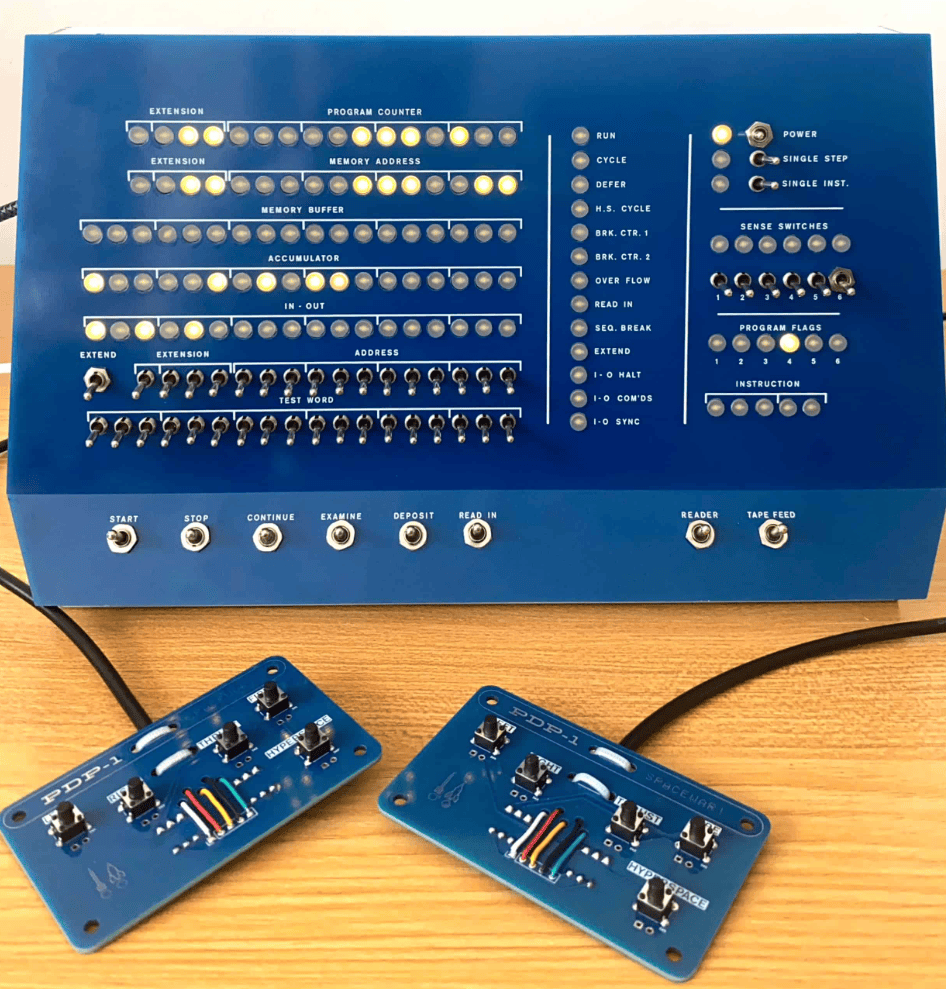
PiDP-1 Console version
The PiDP-1 supports a range of preserved PDP-1 software, including games, graphics demos, and development tools. One of the primary applications is running Spacewar!, considered one of the earliest computer video games.
In addition to gaming, the system is used for democoding, where users create graphical programs using vector display output. Early demos such as Minskytron, Snowflake, and Munching Squares are included or available through the software library.
Development tools such as early text editors, assemblers, and debuggers are also supported, enabling users to write and run programs in PDP-1 assembly. Higher-level languages such as Lisp and FORTRAN are available through preserved toolchains.
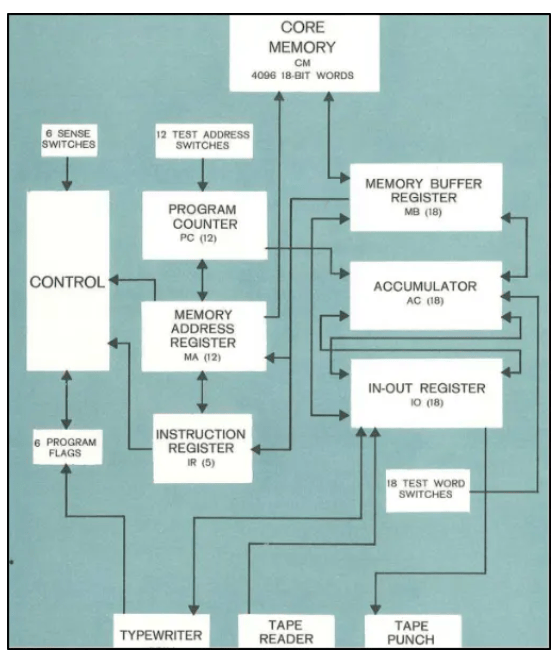
PDP-1 system block diagram
The original PDP-1, introduced in 1960, was one of the first computers designed for interactive use rather than batch processing. It featured an 18-bit architecture with a single accumulator, core memory, and a minimal instruction set of 27 operations.
Programs ran directly on hardware without an operating system, and interaction was performed through switches, lights, and a vector CRT display. The system enabled real-time programming, early debugging techniques, and some of the first interactive graphics applications.
The PDP-1 also played a role in the emergence of early hacker culture and time-sharing systems, influencing later developments in personal computing and software engineering practices.
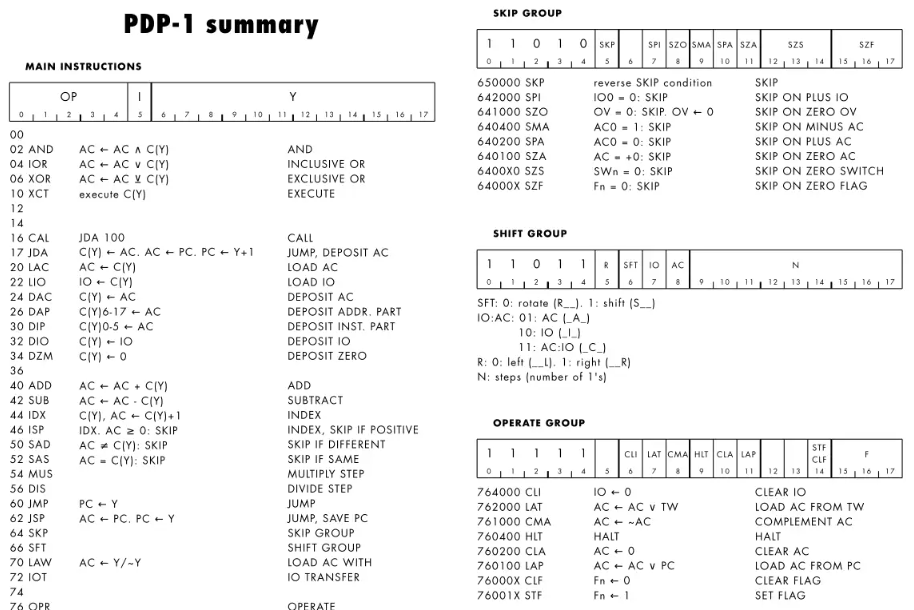
PDP-1 instruction set summary
The PiDP-1 is delivered as a kit intended for assembly by users. Installation involves mounting the front panel hardware, connecting the Raspberry Pi, and loading the provided software environment. The system is powered via standard Raspberry Pi power input and does not require specialized hardware beyond the included components.
Because the system can generate heat during extended use, the designers recommend adequate cooling depending on enclosure configuration.
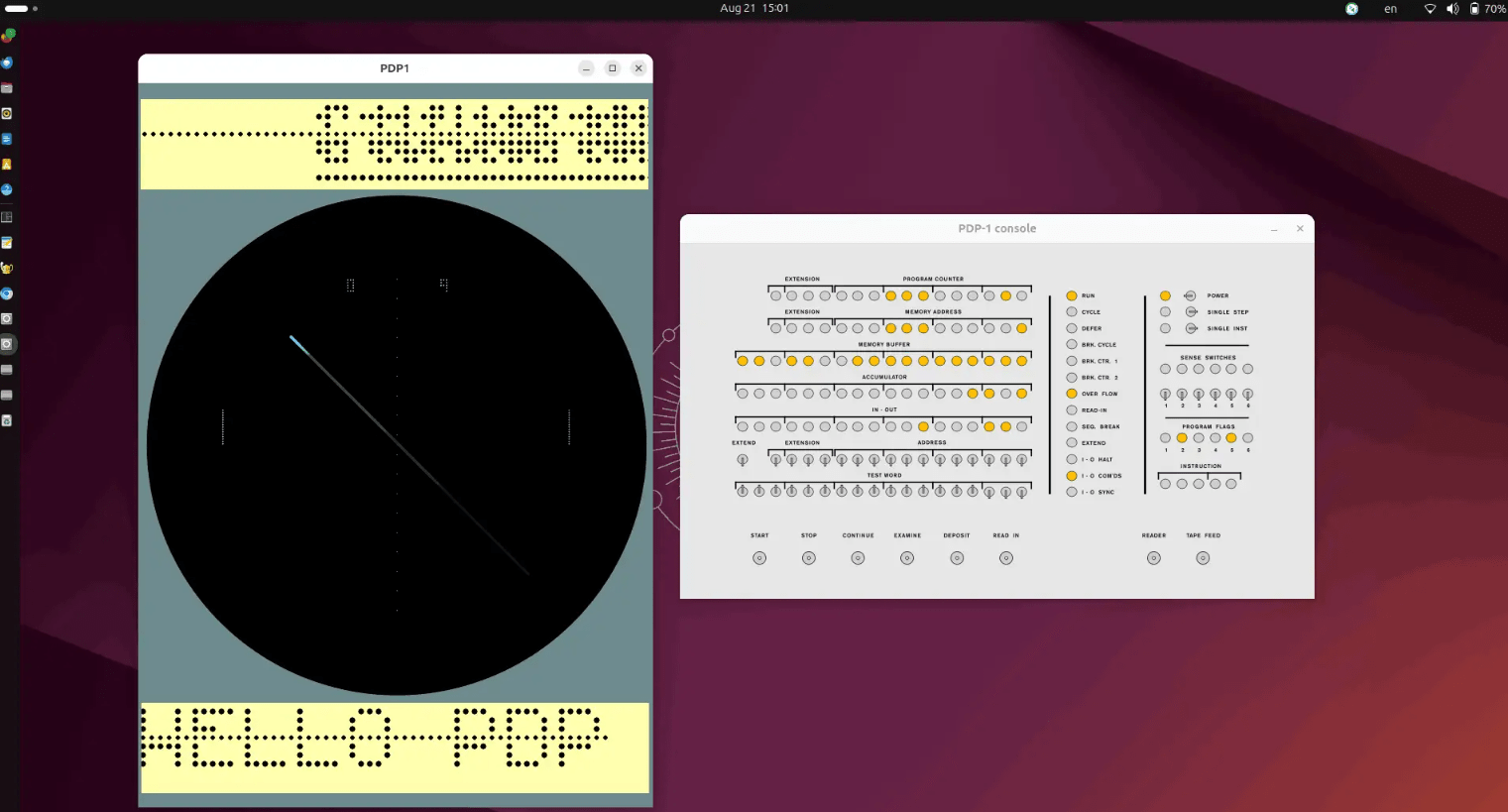
PDP-1 software simulation interface
Obsolescence Guaranteed also provides a software-only version of the PDP-1 simulation, available through its GitHub repository and compatible with Linux environments such as Ubuntu.
Further Information
The PiDP-1 is offered in console and rack configurations, starting at $225 for the console kit and $385 for the rack kit. Assembled versions are available for an additional $125 and $175 respectively.
Both include interchangeable blue and white front panels, while the rack version also ships with both enclosure types. Shipping is a flat $45 worldwide, and users must supply their own Raspberry Pi, with support ranging from the Pi Zero 2 W to the Raspberry Pi 5.

Please comment here...