


Linux-Ready KSTR-IMX93 SBC Debuts With Wi-Fi 6, Cellular IoT, and 802.15.4 Connectivity
Nov 17, 2025 — by Giorgio Mendoza 2,323 views
Conclusive Engineering has introduced the KSTR-IMX93 on Kickstarter, a Linux-capable SBC integrating Wi-Fi 6, cellular IoT, Bluetooth LE 5.4, Zigbee, Thread, GNSS, Gigabit Ethernet, CAN-FD, and PoE in a compact 110 × 55 mm design.
The platform is built around NXP’s i.MX93 application processor, equipped with two Arm Cortex-A55 cores running up to 1.7GHz and a Cortex-M33 subsystem for latency-sensitive tasks.
— ADVERTISEMENT —
Memory options range from 512MB to 2GB of LPDDR4/LPDDR4X, accompanied by up to 128GB of eMMC and a microSD slot for removable storage.
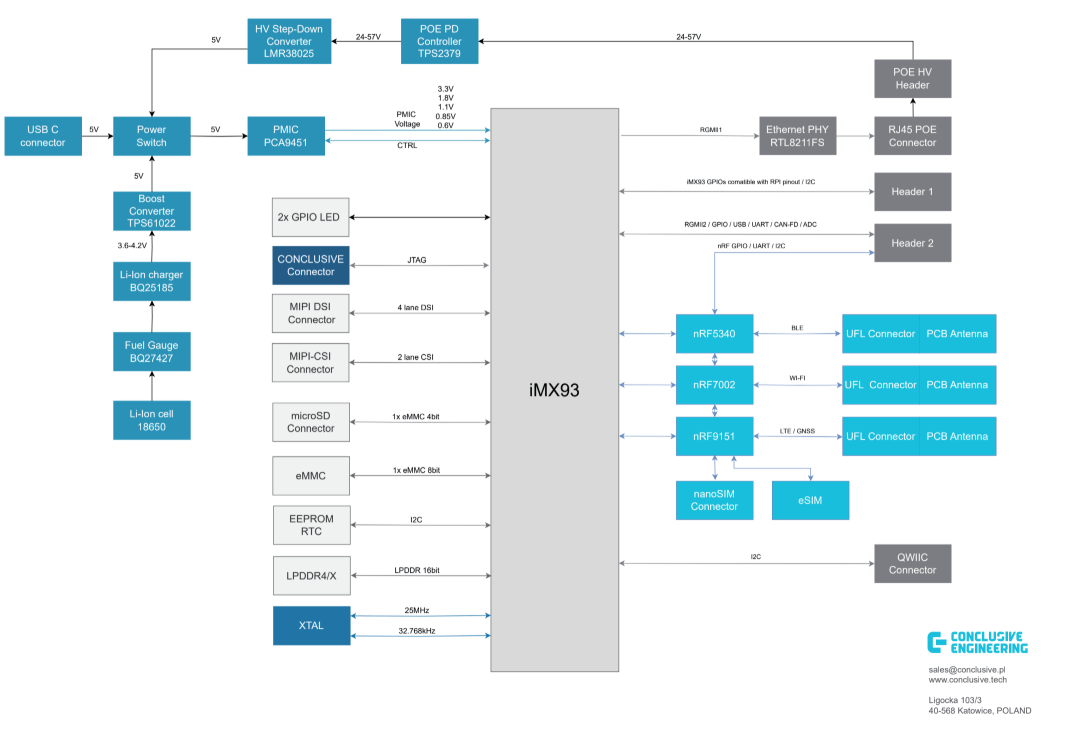
KSTR-IMX93 Block Diagram
Wireless functionality is provided by three Nordic Semiconductor components. According to the specifications, the nRF5340 delivers Bluetooth LE 5.4, Zigbee, Thread, and Matter-readiness.
The nRF9151 introduces LTE-M, NB-IoT, GNSS, and DECT NR+; and the nRF7002 enables dual-band Wi-Fi 6. This configuration allows the SBC to support multiple wireless standards without stacking additional modules or expansion boards.
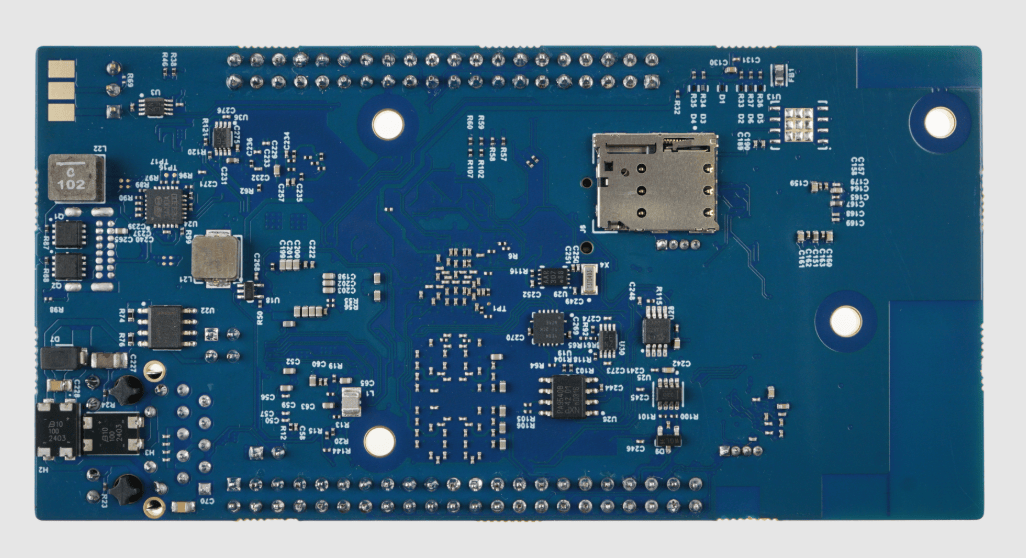
KSTR-IMX93 Bottom View
Wired interfaces include up to two Gigabit Ethernet ports, CAN-FD, and support for IEEE 802.3af Power-over-Ethernet. Expansion options consist of a Raspberry Pi–compatible GPIO header as well as MIPI-DSI, MIPI-CSI, USB-C OTG, UART, I2C, SPI, and ADC inputs.
The company highlights support for Ubuntu, Yocto, and Buildroot, allowing developers to choose between rapid prototyping and production-oriented distributions. Zephyr RTOS is available on the Cortex-M33 subsystem and on Nordic’s wireless chipsets.
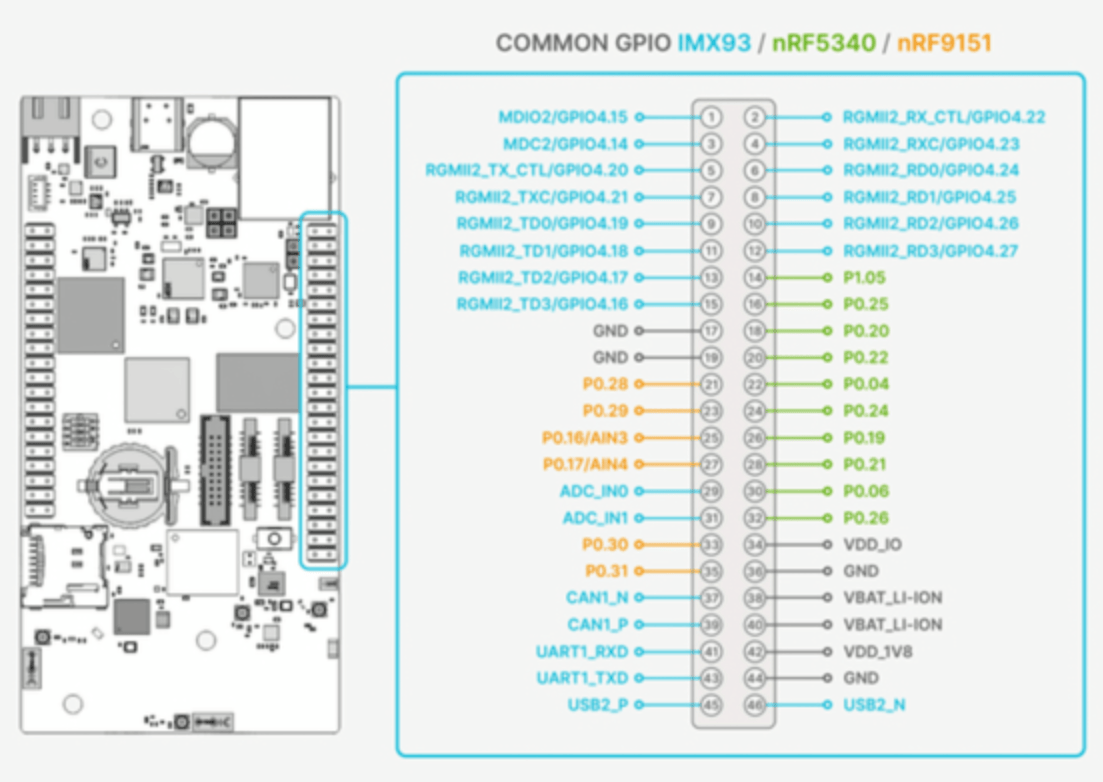
KSTR-IMX93 Pinout
Security features include NXP’s EdgeLock Secure Enclave for authenticated boot and trusted execution, with an optional 0.5-TOPS NPU available for tasks such as anomaly detection or lightweight vision inference.
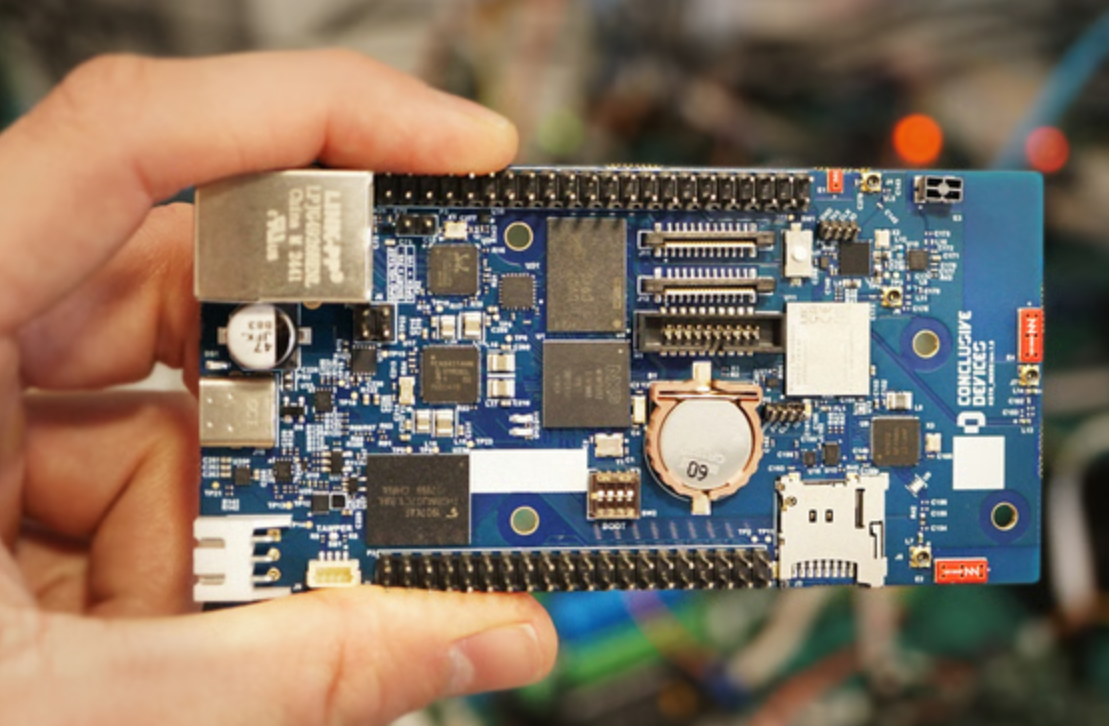
KSTR-IMX93 Top View
The product page also notes that the SBC uses a Raspberry Pi–compatible header to simplify prototyping with existing accessories. A company representative indicated that full documentation is expected to be available around December.
Specifications listed for the KSTR-IMX93:
- Processor / SoC:
- NXP i.MX93
• 2× Arm Cortex-A55 CPU @ up to 1.7 GHz
• 1× Arm Cortex-M33 @ 250 MHz (real-time subsystem)
- NXP i.MX93
- Nordic Solutions:
- nRF5340 (Bluetooth LE 5.4, Thread, Zigbee, Matter-ready)
- nRF9151 (LTE-M, NB-IoT, GNSS, DECT NR+)
- nRF7002 (Wi-Fi 6, 2.4/5 GHz)
- Memory / Storage:
- LPDDR4 / LPDDR4X: 512 MB, 1 GB, or 2 GB
- Up to 128 GB eMMC
- microSD card slot
- Display:
- MIPI-DSI
- Camera:
- MIPI-CSI2
- I/O Interfaces:
- CAN-FD transceiver
- 4× UART, 3× I2C, 1× SPI
- Up to 37× i.MX93 GPIO
- 4× ADC
- Up to 15× Nordic GPIO
- 40-pin connector
- Ethernet:
- 1× 1 Gbit/s RJ-45
- 1× 1 Gbit/s with RGMII interface
- PoE (IEEE 802.3af) supported through RJ-45
- Wireless Connectivity:
- LTE Cat-M1 / NB-IoT
- Wi-Fi 6 (2.4 GHz and 5 GHz)
- Bluetooth LE 5.4
- 802.15.4 (Thread / Zigbee)
- Matter-ready
- DECT NR+
- GNSS
- Built-in eSIM / Soft SIM
- USB:
- USB 2.0 OTG Type-C
- Power:
- 5V USB Type-C
- External Li-Ion battery support w/ charging, charge-level monitoring, & temperature monitoring
- PoE IEEE 802.3af (via RJ-45)
- Mechanical:
- 110 × 55 mm
Further Information
Kickstarter pricing is listed across multiple tiers, including €102 for the Super Early Bird, €110 for the Early Bird, €136 for the standard configuration, and additional multi-unit packs at €265, €643, and €1,200.

Compulab product is available with similar functionality: https://www.compulab.com/products/sbcs/sbc-iot-link-nxp-i-mx93-internet-of-things-single-board-computer/#evalkit