


Ka-Ro QS93 and QS95 solder-down modules come with Linux evaluation boards
Jul 13, 2026 — by Giorgio Mendoza 522 views Germany-based Ka-Ro Electronics’ QS93 and QS95 are compact solder-down computer-on-modules based on NXP i.MX 9 application processors. The QS93 combines dual Cortex-A55 cores with an Arm Ethos-U65 microNPU in a 27mm-square package, while the QS95 uses six Cortex-A55 cores, a 2-TOPS NPU, additional multimedia interfaces, and PCIe connectivity.
The QS93 is based on the NXP i.MX 9352 processor, which includes two Arm Cortex-A55 application cores running at up to 1.7GHz and a 250MHz Cortex-M33 core for real-time processing. The processor also integrates an Arm Ethos-U65 microNPU and NXP’s EdgeLock secure enclave.
— ADVERTISEMENT —
The module includes 1GB of LPDDR4 memory, 4GB of eMMC storage, and 2MB of NOR flash. Display support consists of an LVDS interface and a 2D graphics engine for composition, resizing, and color-space conversion. A two-lane MIPI-CSI interface is available for camera connectivity.
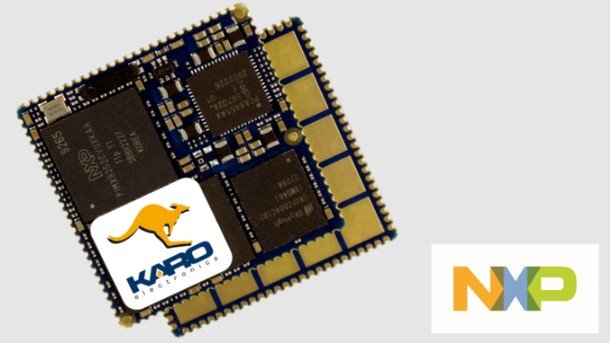
QS93 SoM
Networking and expansion interfaces include two RGMII Gigabit Ethernet connections, two USB 2.0 ports with integrated PHYs, two CAN-FD interfaces, and an SD/eMMC interface. Additional I/O consists of five UARTs, seven I2C buses, four SPI interfaces, six PWM channels, SAI, and up to 60 GPIOs.
The QS93 measures 27 × 27mm and uses a QFN-style footprint with 100 contacts on a 1mm pitch. A large ground pad beneath the module provides a signal-return path and transfers heat to the carrier board. The single-sided module operates from a 3.3V supply and is rated for temperatures from -40°C to 85°C.

i.MX 93 block diagram
Ka-Ro also lists a socketed QS93 configuration measuring 33mm square. This version uses two 80-pin connectors and can be secured with screws, although the company notes compatibility restrictions with some earlier QSBASE carrier boards.
For development, Ka-Ro offers the QSBASE93 evaluation kit, a 56 × 85mm carrier board supplied with the QS93 module. The board includes two 10/100 Ethernet ports, USB 2.0, a USB Type-C connection for power and USB client operation, a DF13 LVDS display connector, a two-lane MIPI-CSI camera connector, a debug UART, and expansion headers. The carrier uses a four-layer PCB with single-sided assembly, and Linux is preinstalled for application development.

QSBASE93 Evalkit top view
The QS95 is based on the NXP i.MX 95 processor family and includes six Cortex-A55 cores running at up to 1.8GHz. It also integrates an 800MHz Cortex-M7 core and a Cortex-M33 core for real-time and low-power processing.
Machine-learning and vision functions are handled by an NXP eIQ Neutron NPU rated at up to 2 TOPS and an image signal processor capable of processing up to 500 megapixels per second. The ISP also supports RGB-IR processing.
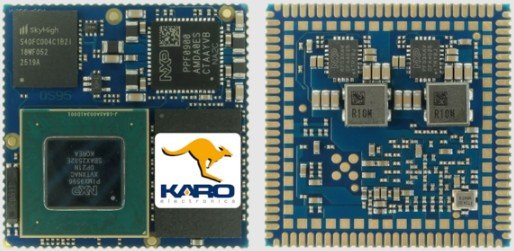
QS95 SoM
The QS95 includes 2GB of LPDDR4 memory and 8GB of eMMC storage. Its multimedia interfaces consist of a four-lane MIPI-DSI display connection, a four-lane MIPI-CSI camera interface, and a four-lane CSI/DSI combination interface. A hardware compositor supports blending, composition, resizing, and color-space conversion.
Connectivity includes two RGMII Gigabit Ethernet interfaces, two CAN channels, two USB ports with integrated PHYs, SD/eMMC, and PCIe. Lower-speed interfaces include three UARTs, three I2C buses, and two SPI controllers.
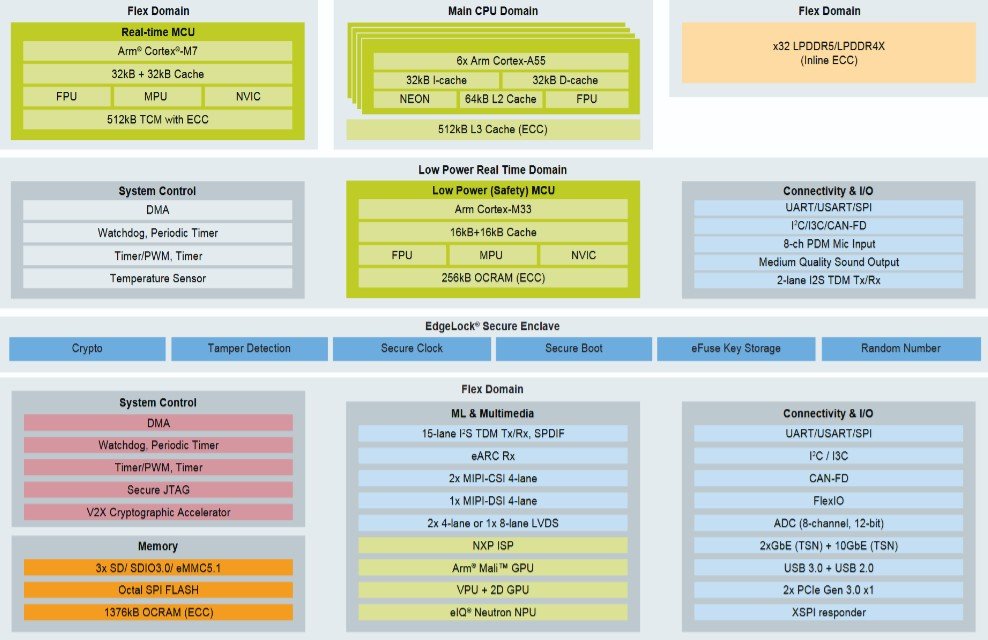
i.MX 95 block diagram
The module measures 29 × 29mm and uses a QFN-like solder-down design with 108 contacts on a 1mm pitch. Its bottom-side ground ring supports signal routing and heat transfer to the carrier PCB. The QS95 is rated for operation from -25°C to 85°C.
The QSBASE95 evaluation kit uses a 56 × 85mm carrier board and includes two Gigabit Ethernet ports, USB 2.0, a USB Type-C connection for power and USB client operation, MIPI-DSI display and MIPI-CSI camera connectors, a PCIe HAT connector, a debug UART, and expansion headers. Linux is also preinstalled for application development.

QSBASE95 Evalkit top view
Software support includes Linux, U-Boot, Yocto BSPs, and Debian 12 images. Ka-Ro also provides hardware documentation, integration guides, schematics, 3D models, design files, and development material covering machine learning, Qt, Electron, and Visual Studio Code through its documentation site, GitHub repositories, and customer download area.
Further Information

Please comment here...