


Hackabone Project Offers BeagleBone-Based Embedded Linux Training with Emulated Framework
Sep 9, 2025 — by Giorgio Mendoza 504 views A new initiative called Hackabone has been launched with the goal of providing more accessible Embedded Linux training. Created by long-time Embedded and real-time Linux instructor Alejandro Lucero, the project combines detailed documentation with a web-based emulation framework centered around the BeagleBone Black single-board computer.
The project name, short for “Hack-a-Bone,” reflects its emphasis on hands-on learning with the BeagleBone platform. While real hardware can be used, Hackabone reduces the barrier to entry by providing a browser-accessible emulation environment that mimics both the development host and target board.
— ADVERTISEMENT —
Training is designed to be followed at the student’s own pace and at a lower cost than traditional in-person courses.
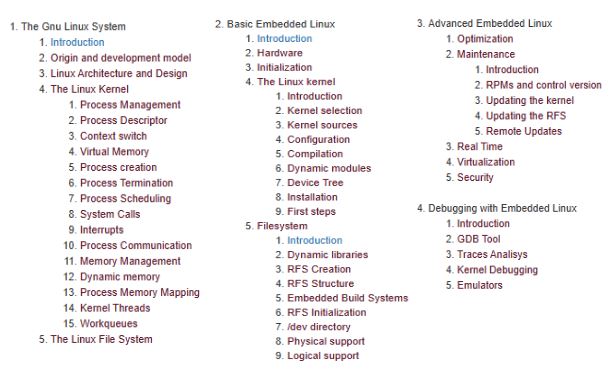
Hackabone Contents Index
The framework covers fundamental and advanced topics in Embedded Linux, beginning with system architecture and kernel design, and extending into device trees, real-time programming concepts, debugging, and security. Training is structured into modules:
- Basic Embedded Linux – hardware initialization, kernel configuration, and filesystem creation.
- Advanced Embedded Linux – optimization, kernel and root filesystem maintenance, updates, and security.
- Debugging – GDB, trace analysis, and kernel-level debugging.
Documentation also includes a detailed index on process management, scheduling, memory handling, and file system structures within the Linux kernel.
The stack of software used for exercises includes U-Boot, the Linux kernel from the BeagleBone repository, GNU toolchains from Linaro, BusyBox, Buildroot, QEMU for emulation, and Hackabone’s own RTLinux microkernel patches.
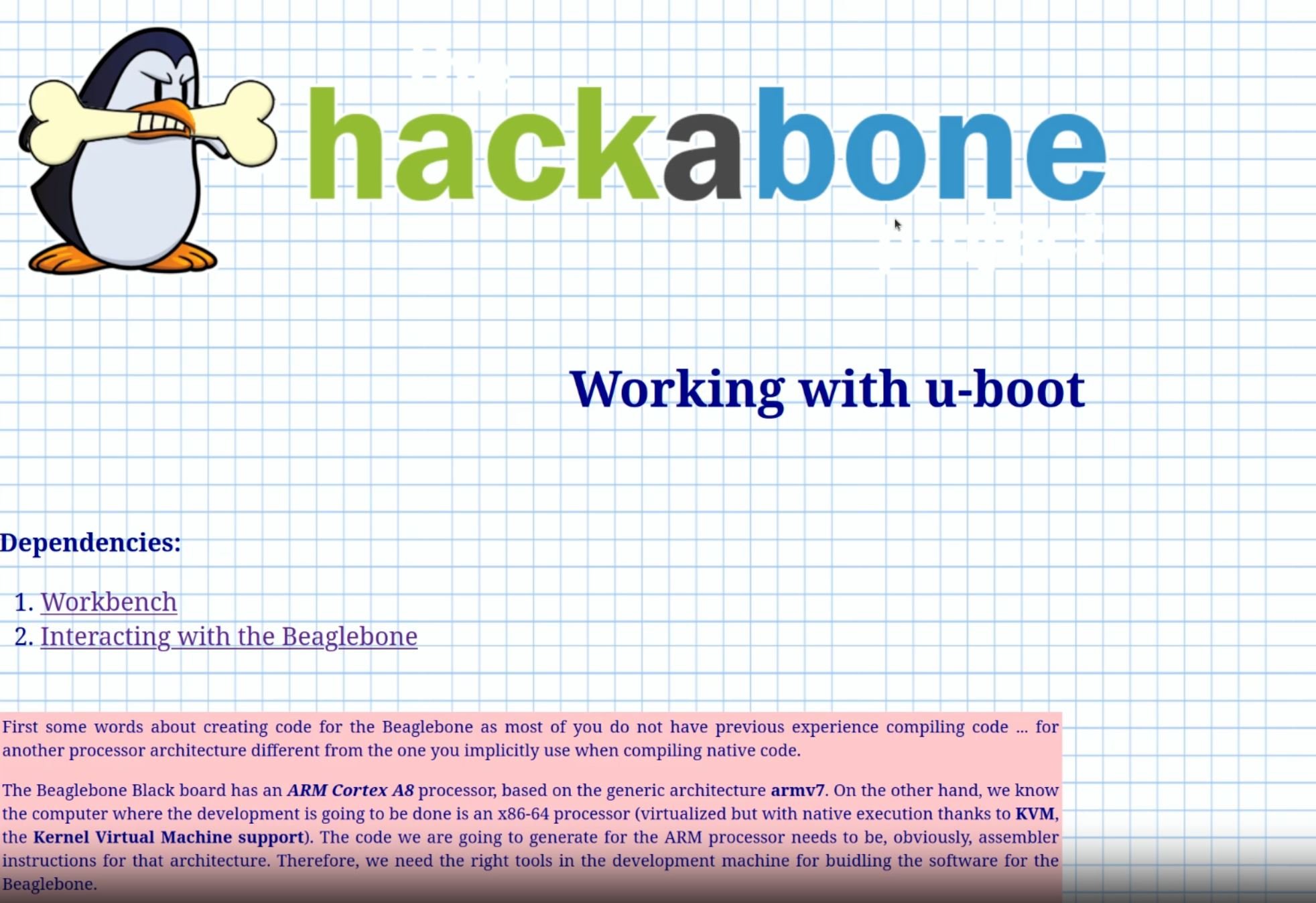
Hackabone Modules Demo
The VM framework offers two virtual machines: one for development, and one for emulating the BeagleBone Black. This approach eliminates the need for learners to set up cross-compilation environments or hardware connections before beginning the exercises.
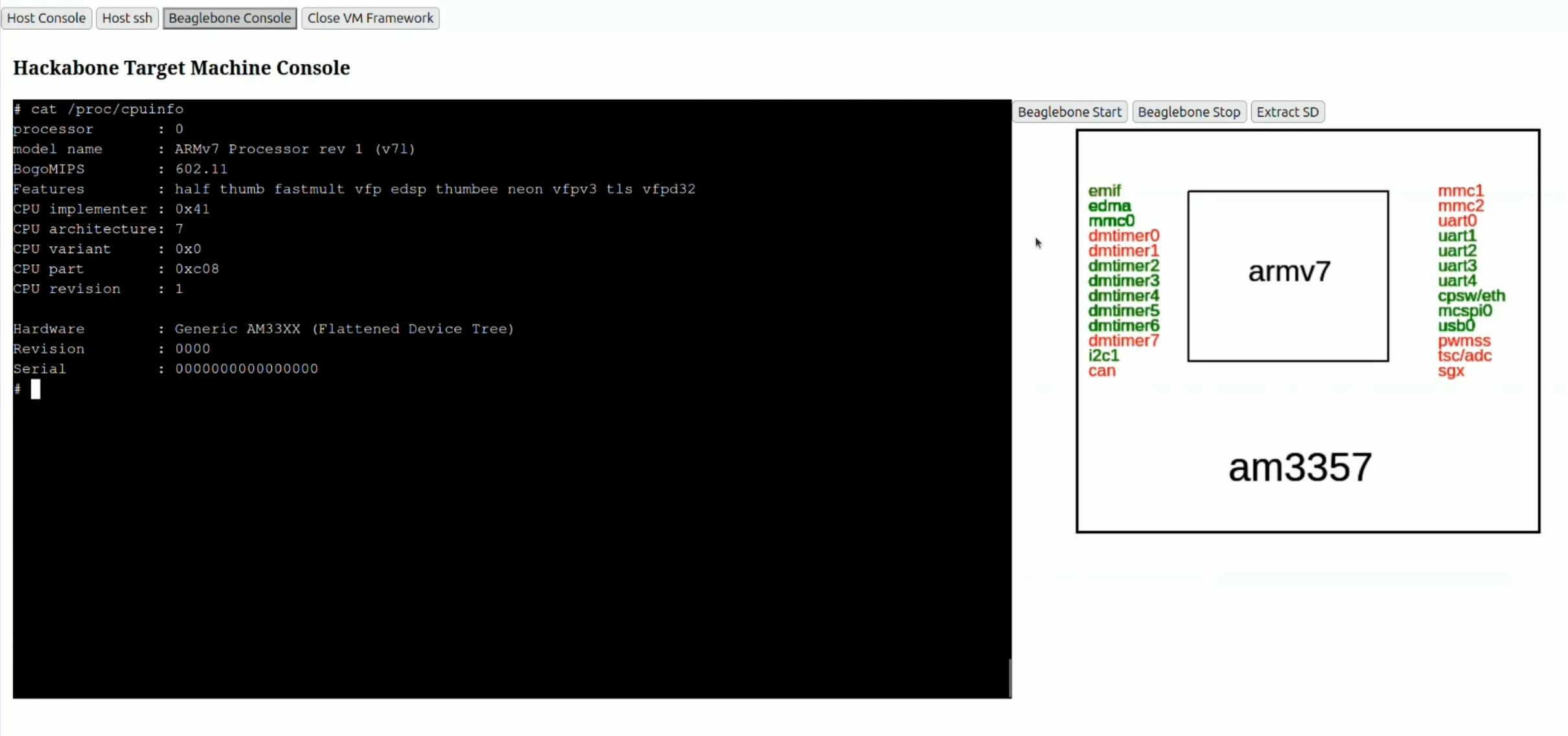
Hackabone BBB Emulator Demo
According to Lucero, Hackabone complements established providers like Bootlin by lowering the initial barrier for learners. While Bootlin and others rely on direct use of boards, Hackabone emphasizes starting immediately with a ready-to-use environment, which allows students without hardware to gain practical experience. Exercises completed in the emulator are designed to transfer directly to real BeagleBone Black hardware.
Future modules on Linux device drivers, networking, and security are in preparation. Real-time programming is also planned, though Lucero notes that QEMU-based emulation has limitations in accurately reflecting real-time behavior.
Hackabone is designed as a collaborative platform. Contributors can suggest improvements, add content, or take ownership of specific sections. The site highlights recent contributions and their authors, which Lucero sees as beneficial for learners building academic or professional credentials.
Further information
Hackabone is available now at hackabone.com. Guest access is free, while contributor status provides full documentation and emulation framework access for a one-time yearly payment of about $40 USD. The contributor tier includes 30 hours of emulated BeagleBone access, with the option to purchase more time if required.
Current training focuses on Embedded Linux, with additional topics planned in staged rollouts.

Please comment here...