


ESP32 Bus Pirate Turns Low-Cost Boards into Multi-Protocol Debugging Tools
Sep 26, 2025 — by Giorgio Mendoza 11,059 views An open-source project called ESP32 Bus Pirate has been released, inspired by the classic Bus Pirate and adapted for modern ESP32-S3 hardware. Developed by Geo-tp, the firmware transforms low-cost ESP32 boards into versatile debugging devices that can probe, sniff, and interact with a wide range of digital and radio protocols.
The firmware supports protocols such as I²C, SPI, UART, 1-Wire, CAN, and JTAG, as well as infrared, smartcards, and USB device emulation. It also extends to wireless communication, enabling interaction with Sub-GHz radios, Bluetooth, Wi-Fi, RFID, and RF24 devices. A built-in scripting engine allows automation using Bus Pirate-style bytecode instructions or Python.
— ADVERTISEMENT —

ESP32-Bus-Pirate Supported Devices
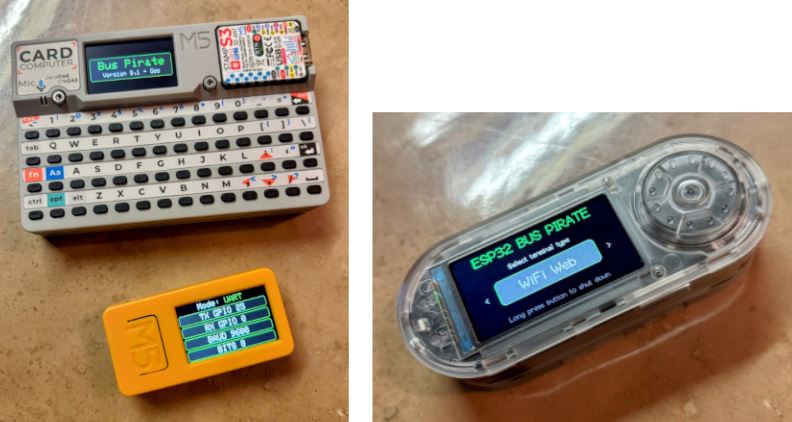
One of the main advantages of the project is accessibility. Because it runs on standard ESP32-S3 boards, there is no need for a dedicated hardware platform. Users can flash the firmware to devices ranging from entry-level ESP32-S3 dev kits to more advanced boards with integrated screens, keyboards, or sensors. Hardware prices range from about $7 to $60, depending on the chosen setup.
ESP32-Bus-Pirate Demo
Supported devices include the M5 Cardputer series, M5 Stick C Plus 2, M5 AtomS3, LILYGO T-Embed, and Seeed Studio Xiao ESP32-S3. However, the GitHub notes that any ESP32-S3 board with at least 8MB of flash memory can run the firmware, though pin mappings may require adjustment for each device.
ESP32-Bus-Pirate Interfaces
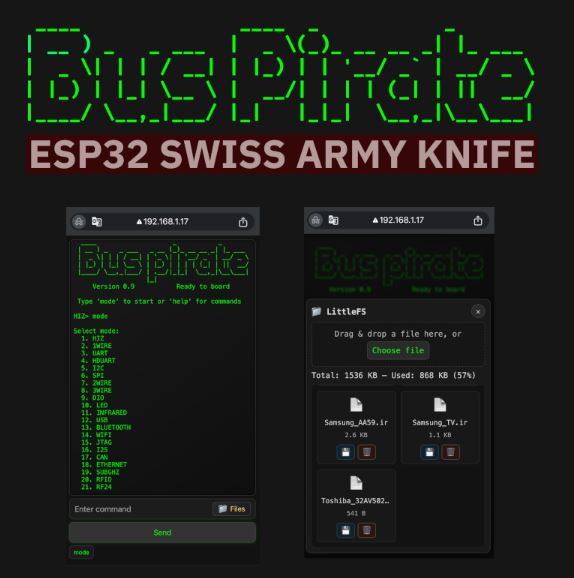
The ESP32 Bus Pirate firmware offers multiple interfaces: a traditional serial terminal for low-latency work, a web-based terminal accessible over Wi-Fi for headless setups, and a standalone mode for devices with built-in displays and keyboards. Users can issue commands to scan buses, sniff traffic, dump EEPROMs, replay radio signals, or control GPIOs.
Further Information
The project is available on GitHub under an open-source license, with active contributions encouraged from the community.

Please comment here...