


Coin-Sized Romu Packs Raspberry Pi RP2354A into USB Type-A Form Factor
Oct 13, 2026 — by Giorgio Mendoza 4,930 views Bitmerse’s Romu recently debuted on Crowd Supply as an ultra-compact development board based on the Raspberry Pi RP2354A microcontroller. Designed to plug directly into a USB Type-A port, the board features capacitive touch input, an RGB LED and MicroPython support
The board is powered by the Raspberry Pi RP2354A microcontroller, which features dual Arm Cortex-M33 and dual Hazard3 RISC-V cores, with software-selectable processor architecture operating at up to 150 MHz. It integrates 520 KB of on-chip SRAM and 2 MB of flash memory.
— ADVERTISEMENT —
Unlike conventional development boards with exposed GPIO headers, the device uses an integrated USB Type-A connector. It supports USB 2.0 Full-Speed communication and draws power directly from the USB port at 5V, regulated to 3.3V onboard. Potential applications include USB HID devices, macro keyboards, programmable shortcuts, and security keys.
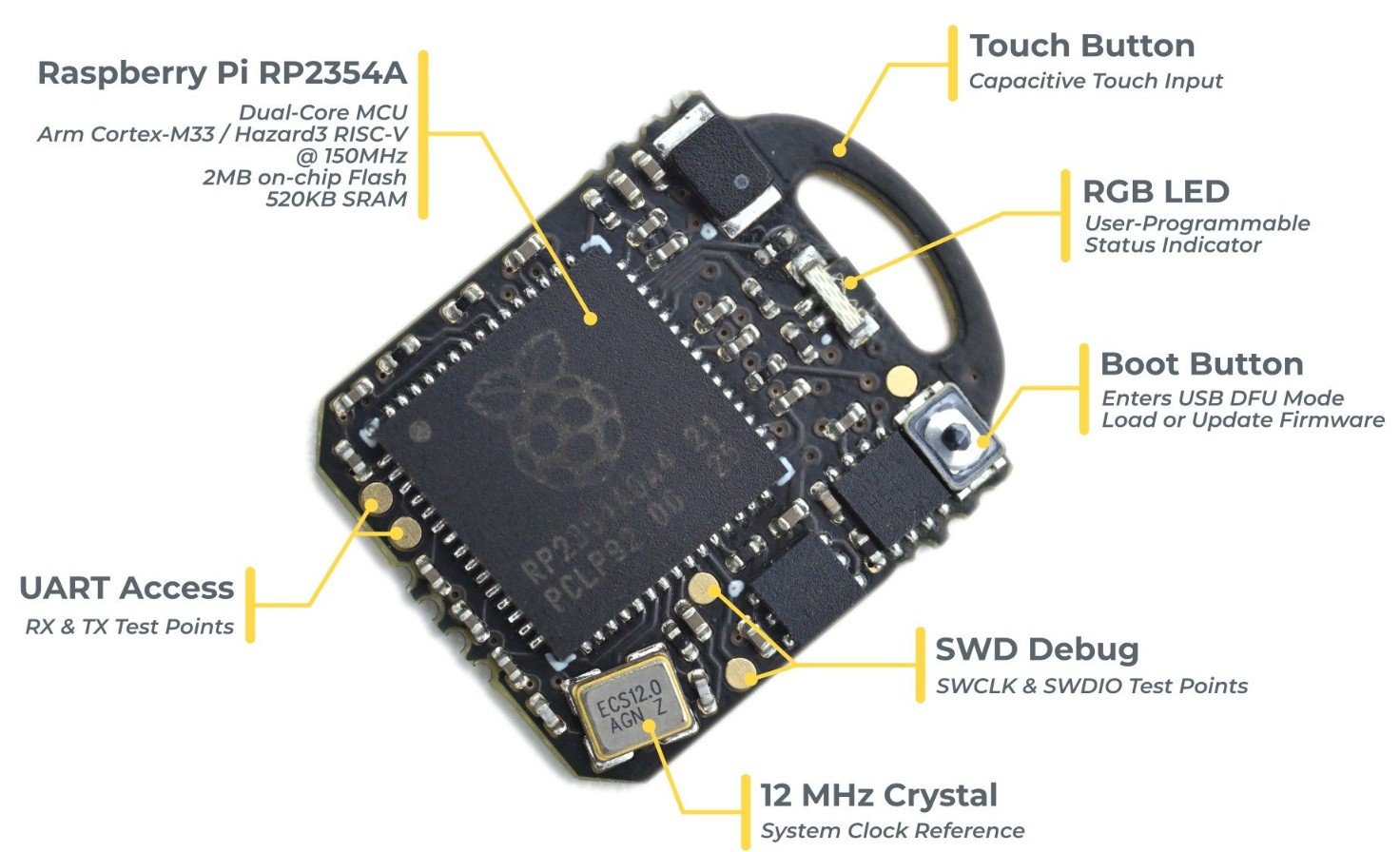
Romu features
Measuring just 15.5 × 12 mm, Romu is compact enough to remain connected to a computer or be carried on a keychain. Its hardware includes a preinstalled 3D-printed protective shim, a programmable RGB LED, a capacitive touch button, and a dedicated boot button for firmware updates.
For software development, MicroPython comes preinstalled and can be used with the Thonny IDE without requiring an external programmer. The project also includes demonstration firmware for FIDO2/U2F authentication and one-touch macros, while other possible applications include USB MIDI controllers and status indicators.
For hardware-level debugging, Bitmerse offers an optional Programming & Debugging Jig. The accessory uses a pogo-pin mechanism to contact test points on the board without soldering or permanently installed headers.
The accessory provides USB Type-C connectivity, SWD debugging through a standard 20-pin JTAG connector, and UART RX/TX access. A mechanical clamping mechanism secures the board during programming and debugging.
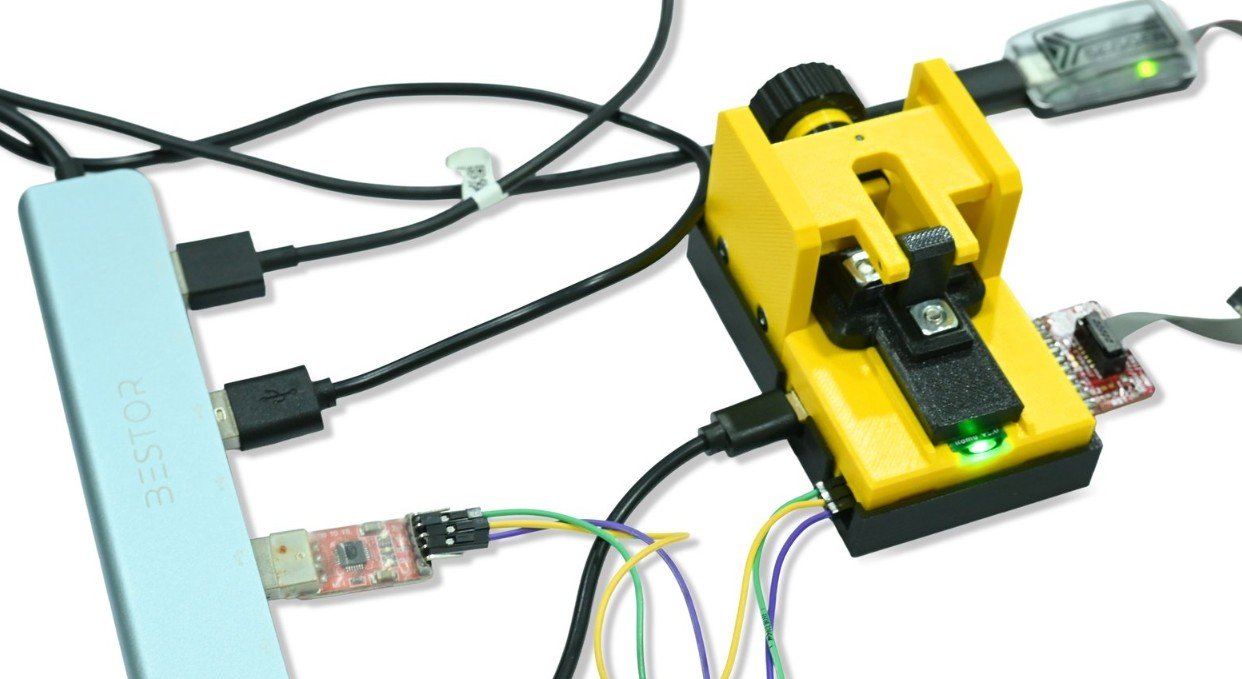
Romu programming & debugging jig
As an open-hardware project, Romu is expected to have its schematics, PCB design files, bill of materials, 3D-printable enclosure files, and MicroPython examples published through the project’s GitHub repository before shipping. Bitmerse has already manufactured and tested a small batch of boards with Elecrow, which is also expected to handle production for the crowdfunding campaign.
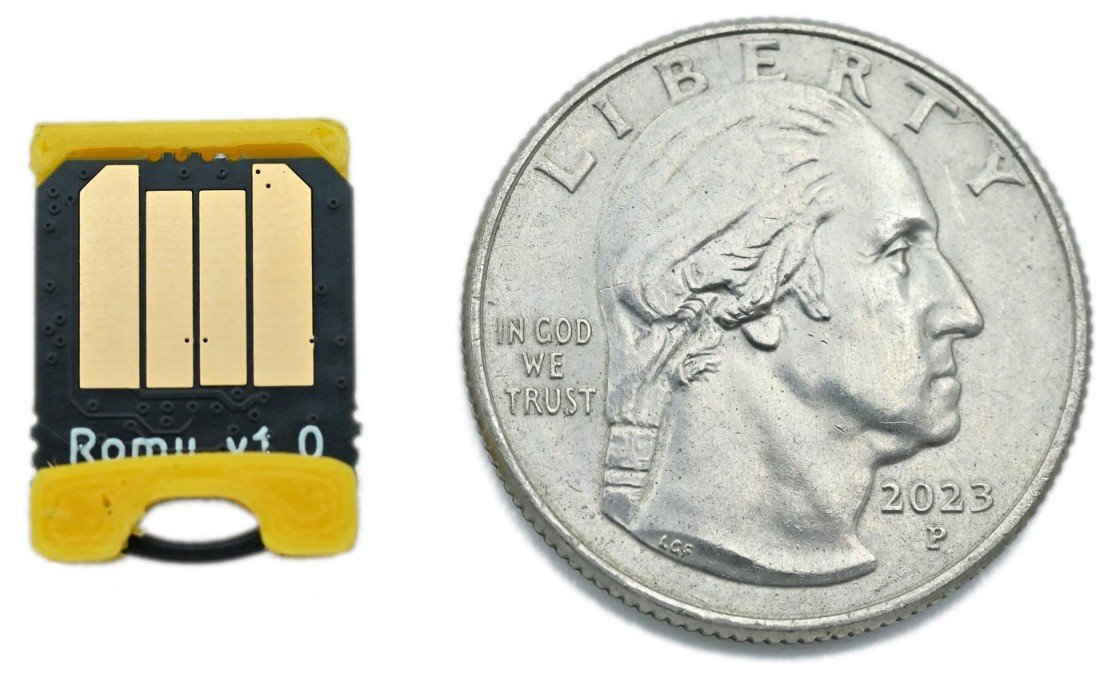
Romu dimensions
Further Information
The Romu crowdfunding campaign is currently active on Crowd Supply, with pledges starting at $40 for a single board or $90 for a three-pack. A single board bundled with the Programming & Debugging Jig costs $65, while a three-pack with the jig costs $115.

Please comment here...